
24/7 Water Damage Restoration in Madera, CA
Water damage restoration in Madera, CA means stopping the source, pulling out standing water and drying the structure before it warps, stains or smells. The emergency line is answered 24/7, and a crew can be sent the same day when one is available.
While you call
Active Water Damage Right Now?
The 24/7 line is answered every hour of every day. Call first, then follow the safety steps below.
When Water Is Spreading, the First Hour Matters
Water damage restoration is the work of removing water from a building and drying the materials it soaked, so that floors, walls and framing return to a normal moisture level. It starts with stopping the source and ends with readings that prove the structure is dry.
If you are standing in water right now, do these things before anything else. Close the main shut-off valve. Keep people and pets out of any water that may have come from a drain or sewer. Switch off power to wet areas only if you can reach the panel while standing on a dry surface, and call 911 or the utility for sparking, buzzing or a burning smell before you call us.
Then call (559) 597-1434. The emergency line is open every hour of every day, and the dispatcher will ask where the water came from, how many rooms are wet and whether anything electrical is involved. Photograph the damage before anything is moved, since those pictures help with a claim later.
Water Damage Services for Madera Homes and Businesses
The 19 service pages are sorted by cause, because the cause decides the plan. A split supply line is clean water that can often be dried in place. A sewage backup is contaminated and handled very differently. Pick the page that matches what you see, or call and describe it.
Pipe failures are the most common emergency. The burst pipe page covers pressurized lines, the water heater leak page covers failed tanks and the slab leak page covers lines under the foundation. After a rare hard freeze, the frozen pipe page applies.
Flood Damage Cleanup
Water that rose from outside and needs removal, cleaning and a full dry-out.
Water Extraction
The first move when water is standing on floors, pulled out before it sinks in.
Commercial Water Damage
Shops, offices and apartment buildings, where downtime and shared walls matter.
Ceiling Water Damage Repair
Stains and sagging overhead, traced to a roof, a bathroom above or an attic line.
Basement Water Damage
Lower levels and below-grade rooms that took in seepage or a failed pump.
Sewage Backup Cleanup
Contaminated backups from drains and sewer lines, cleaned with protective gear.
Appliances and air conditioning cause a steady share of losses. A dishwasher line, a washer hose or a clogged condensate drain can soak a floor overnight, and the appliance leak page and AC leak page explain what happens next. Kitchens get their own treatment on the kitchen water damage page.
Once the water is out, floors and walls need individual decisions. The carpet, hardwood and wall and drywall pages explain what is dried in place and what is replaced. The full list lives on the all services page.
How a Water Damage Job Runs
Call and describe
The dispatcher asks about the source, the rooms and any electrical risk, and tells you what to do while a crew is arranged.
Stop and assess
The crew confirms the source is controlled, checks the water category and maps moisture with meters and thermal imaging.
Extract and remove
Extraction units pull standing water, and soaked pad, insulation or soft drywall are removed where drying cannot save them.
Dry the structure
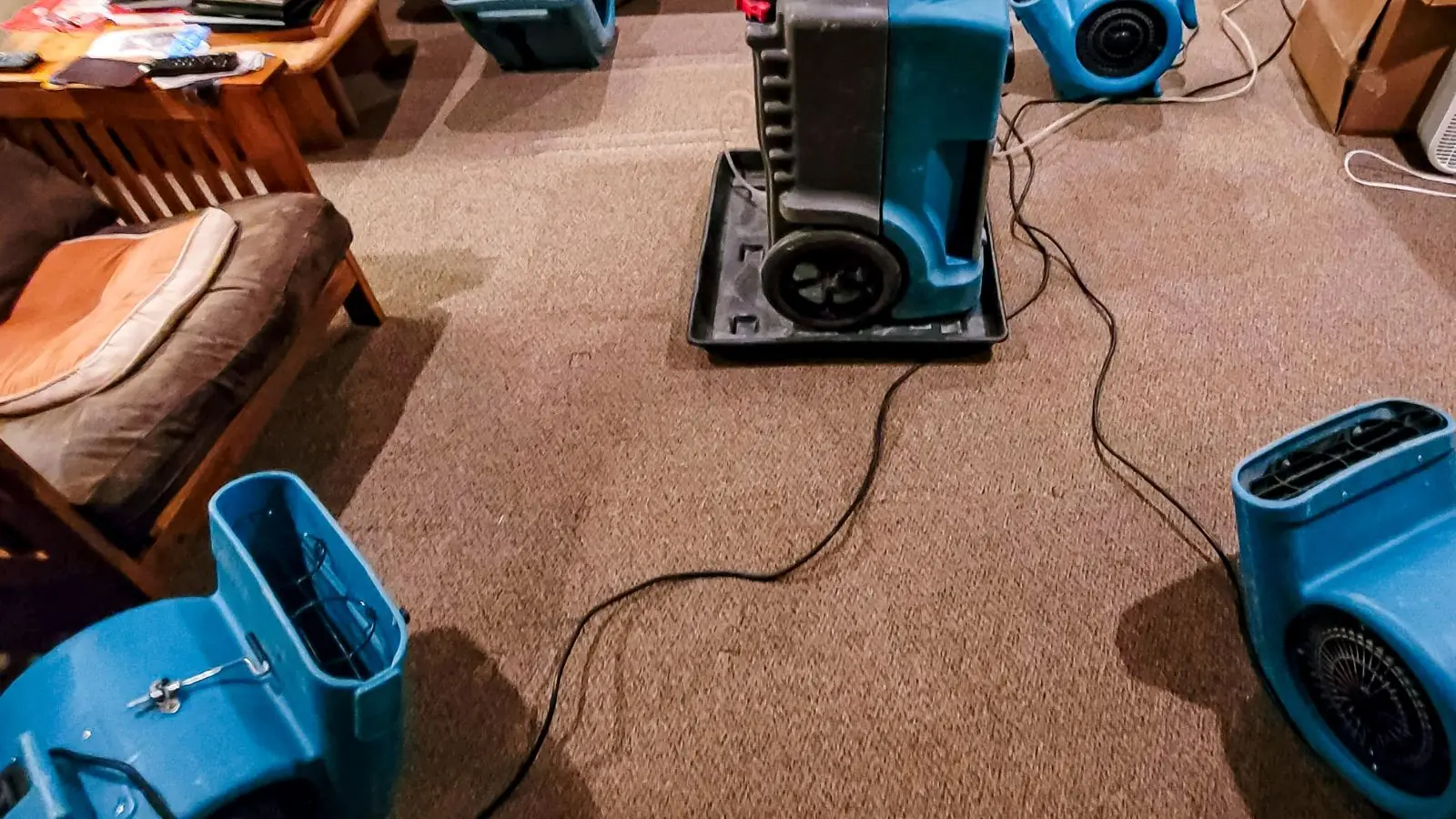
Air movers and LGR dehumidifiers run while readings are taken each day.
Verify and hand off
Equipment comes out when readings match a dry reference, and the rebuild begins as a separate scope.
The drying approach follows ANSI/IICRC S500, the published standard for water damage restoration, and it is fair to ask any company whether its crews work to it. The scope and price are explained before work starts, and the sections below show what sets that price.
Water Categories at a Glance
The category of the water decides what can be saved. Clean supply water gives you the most options, and contaminated water removes porous materials from the plan. The water extraction page and the sewage backup page show how crews handle the two ends of the range.
| Category | Typical sources | What it usually means |
|---|---|---|
| Category 1 | Supply lines, tanks, faucet overflows | Many materials can be dried in place if the water is addressed quickly |
| Category 2 | Washer or dishwasher discharge, some drain overflows | Pad and other porous items are usually removed, and the rest is cleaned and dried |
| Category 3 | Sewage, river or slough water, long-standing water | Porous materials come out, and surfaces are cleaned and treated with protective gear |
Water that starts clean can move toward Category 2 or 3 as it sits, which is why calling early changes the outcome.
Insurance and Documentation
Sudden and accidental water damage is often covered by a homeowners policy, gradual leaks and neglect often are not, and flood damage usually needs a separate flood policy. Check your policy or ask your insurer, because the wording decides.
Whatever your policy says, good records help. Photograph the source and every wet room before cleanup, keep the plumber's note about the failed part and ask the crew for its scope, moisture readings and daily drying log. Keep receipts for emergency work.
For a very large loss, such as several rooms, a whole floor or a multi-unit building, expect the insurer to be involved and the scope to be set in phases. Mitigation should not wait for that process, because water keeps damaging materials while the claim is open.
Madera Homes, Streets and Water Systems
Madera is the Madera County seat, and the crews work the whole city, from the blocks around the Madera County Courthouse on West Yosemite Avenue to the newer subdivisions near State Route 99. Giving the dispatcher a cross street or a nearby landmark, such as the courthouse, Madera High School, Madera South High School or Madera Community College, speeds up the first conversation.
The housing stock sets the pattern for local losses. The City of Madera draft housing element reports that about 47 percent of units were built before 1980, about 24 percent in the 1970s, about 18 percent before 1960 and about 33 percent between 2000 and 2009. Older homes carry older supply lines and heaters, and homes from the 2000s are reaching the age where original connectors fail.
About 22 percent of units are multifamily, so water from one unit often reaches its neighbors.
The City of Madera Water Division reports more than 200 miles of distribution pipe and takes reports of leaks on the street side of the meter. Pipe behind the meter belongs to the owner, and so does the cleanup.
The Fresno River passes north of downtown, and the Madera Irrigation District warned in 2023 that high runoff was expected and that breaks can occur on properties next to streams and creeks. Madera County is the flood control agency, and the FEMA flood map for your address shows your mapped exposure.
Coverage includes the Madera ZIP codes 93636, 93637, 93638 and 93639, plus the communities around them. The City of Madera Building Division handles permits inside city limits, and Madera County handles properties outside them, so ask the right office whether a rebuild needs a permit.
Where the Crews Work
The same 24/7 line covers Chowchilla, about 16 miles northwest along State Route 99, and the Madera County communities of Raymond and O'Neals. Biola (ZIP 93606) lies in Fresno County, and Le Grand and Planada lie in Merced County, so permit and utility offices differ there. They are served as nearby areas, and the service area page lists the details that change from place to place.
Neighborhoods We Serve in Madera
Crews work the whole city, and five neighborhoods have their own pages with the details that change from street to street. Downtown Madera has the oldest housing and shared buildings. Parkwood, Madera Acres, Madera Ranchos and Parksdale are unincorporated communities around the city, where the county handles permits and the water systems differ.
What We Do and Do Not Do
This line handles the water after a loss: extraction, removal of unsalvageable materials, drying and the records that go with it. It does not install waterproofing systems, French drains or sump pumps, and it does not repair roofs or replace plumbing. If you want a basement kept dry for the future, a drainage contractor is the right call, and a plumber fixes the pipe.
Crews can coordinate with those trades, and it is usually best to have the source fixed while the structure dries. That sequence keeps the repair from being wet again.
Water Damage Questions in Madera
Do you handle water damage emergencies at night or on weekends in Madera?
Yes. The emergency line is answered 24/7, including nights, weekends and holidays, and a crew can be sent the same day when one is available.
What should I do first when water is coming into my home?
Close the main shut-off valve, keep people away from wet electrical items, lift valuables off the floor and photograph the damage. Then call (559) 597-1434.
How is the price set for a water damage job?
You hear the scope and price before work starts. They depend on the water category, the area affected, the materials involved, the drying days and the rebuild scope.
Does insurance pay for water damage?
Sudden and accidental damage is often covered, gradual leaks often are not, and flood usually needs separate coverage. Check your policy or ask your insurer.
Do you waterproof basements or install sump pumps?
No. This line handles water removal and drying after a loss. A drainage contractor handles waterproofing and sump systems, and a plumber handles pipes.
Which ZIP codes do you cover in Madera?
The Madera ZIP codes 93636, 93637, 93638 and 93639, along with Chowchilla (93610) and the communities around the city.
Do you serve Chowchilla and the towns around Madera?
Yes. The Chowchilla page covers that city, and the same line serves Raymond, O'Neals and nearby communities.
What if the loss is very large?
Large losses are handled in phases, with the insurer involved. Water removal and drying start right away so the damage does not keep growing while the claim is reviewed.