
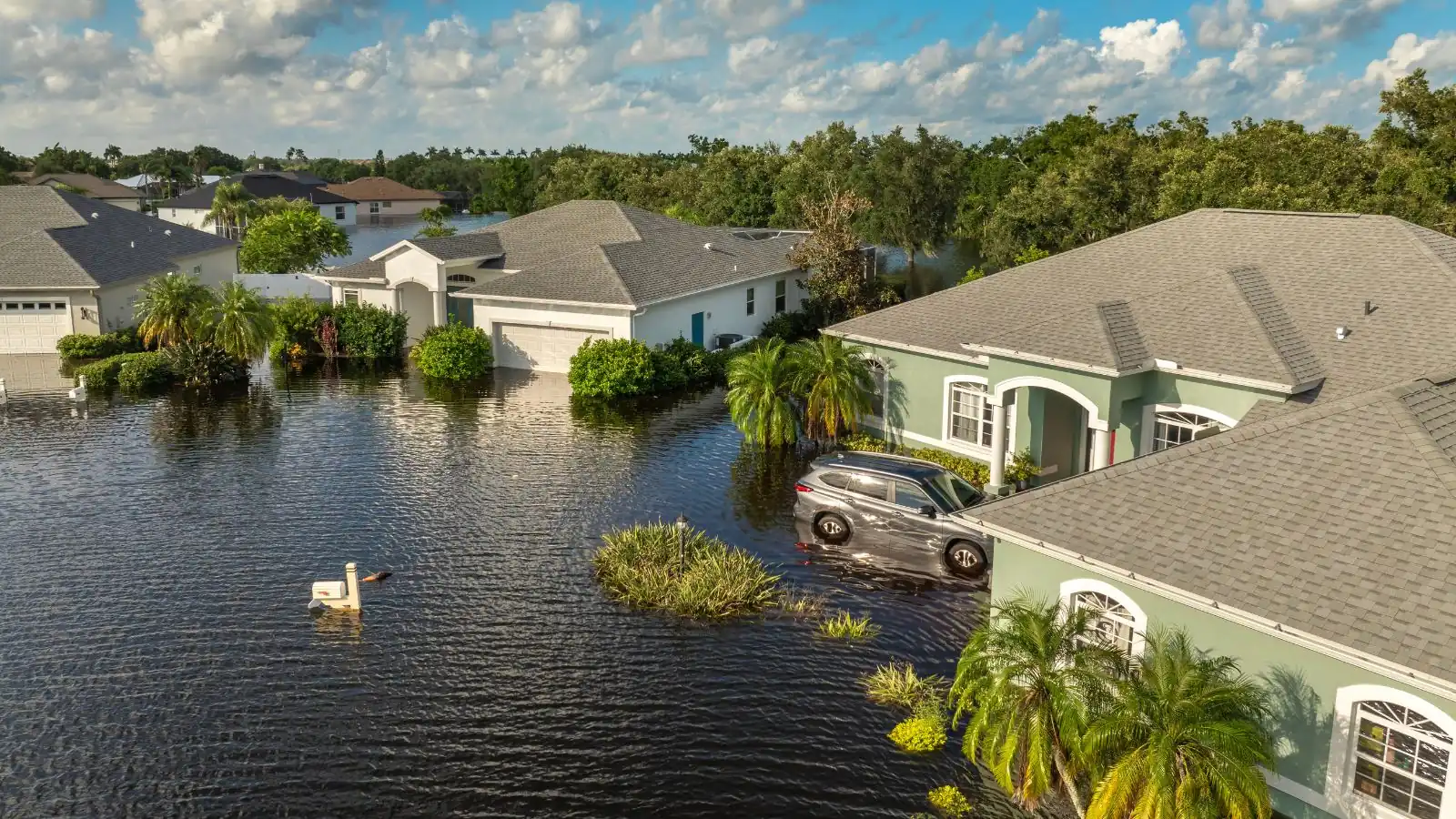
Storm water damage is the harm done when wind and rain breach the building envelope. Shingles lift, flashing fails, a limb strikes the roof or a window leaks, and rain reaches ceilings, insulation and walls.
This differs from flood damage. Storm damage comes through the building from above or the side, while flood water rises from the ground.
Call the 24/7 line, and keep people away from sagging ceilings and damaged areas.
When storm water is an emergency
Rain still entering is an emergency. Move belongings away from the wet area, set buckets, and cover furniture with plastic. If a ceiling is bulging, keep clear.
Never go on a wet roof. A tarp is a job for a roofer with proper equipment, and a restoration crew can coordinate with them.
If a limb or debris has damaged the roof, photograph it from the ground and call. Downed power lines are a 911 call.
Storm events in Madera County
California's state emergency services office reported a 2023 proclamation of emergency for winter storms that included Madera County. The Madera Irrigation District also warned that high runoff was expected that March.
Storm seasons repeat, and the practical response is the same each time. Inspect the roof, clear gutters and drains, and know who you will call.
Storm damage inside?
Stay clear of sagging ceilings and call. A crew can be sent today.
Damage that follows a storm
Ceiling and attic
Wet insulation and stained drywall below roof leaks.
Window and wall leaks
Rain driven through frames and siding.
Fallen limbs
Impact damage that opens the roof.
Gutters and drains
Overflow that sends water into walls and foundations.
A plain roof leak with no storm event is covered on the ceiling water damage page.
How cleanup works
Crews check with moisture meters, remove wet insulation and soft drywall, and dry the structure with air movers and dehumidifiers.
Stabilize
Control the entry point and protect contents.
Open
Remove wet insulation and drywall.
Dry
Run equipment until readings are normal.
Repair
Rebuild ceilings, walls and trim.
Equipment is explained on the structural drying page.
Before the next storm
Check flashing and shingles, clear gutters and downspouts, and know where your main shut-off is. Photograph the exterior while it is in good shape, so you have a baseline.
What a storm does to a building envelope
Wind-driven rain finds weak points that ordinary rain misses. Flashing around chimneys and vents, the seams where roof planes meet walls, window frames and garage door seals are common entry points. Water often travels along rafters before it drips, so the stain can sit several feet from the opening.
After a storm, check the attic with a flashlight from the access hatch, without stepping onto the framing. Look for dark streaks on the underside of the roof deck, wet insulation and daylight where there should be none.
Photograph the exterior from the ground, and keep leaves, limbs and debris that fell during the storm until an insurer has seen them.
Order of operations after a storm
First, safety. Stay away from downed lines, and keep people out of rooms with sagging ceilings. Second, stop more water from entering, which means a roofer or a temporary cover on the opening. Third, dry the interior so the damage does not spread.
Many people call the restoration company first, and that is fine. The crew can tell you what is urgent and coordinate with a roofer. What matters is that wet insulation and drywall do not sit for days.
After the structure is dry, repairs begin. Permit rules for roof and structural work vary, so ask the City of Madera Building Division, or the county outside city limits.
Safety checklist before the crew arrives
- Stay away from downed lines and anything touching water
- Keep out of rooms with sagging ceilings
- Cover the roof opening only if it is safe to reach
- Photograph the exterior and the interior
- Keep fallen debris until the insurer has seen it
What sets the price
| What changes the price | Why it matters |
|---|---|
| Entry points | More leaks mean more wet areas. |
| Insulation and drywall | Wet insulation is replaced and soft drywall is cut out. |
| Interior finishes | Flooring and paint add scope. |
| Drying days | Attics and cavities dry slowly. |
| Roof repair | Roofing is separate from restoration. |
Wind and rain damage is often covered under standard policies, though flood is not, so check your policy and ask your insurer. Call (559) 597-1434 to hear what your storm loss involves and what it costs before work starts.
Where we work
The line covers Madera and Chowchilla.
The line also serves Madera Ranchos, a rural community east of Madera where long lots let rain run toward the house.
Questions About Storm Water Damage in Madera
Do you handle storm water damage emergencies at night or on weekends in Madera?
Yes. Storm damage often arrives after dark, and the line is answered 24/7, with a crew sent the same day when one is available.
Do you tarp roofs?
Roof tarping is a roofer's job. The restoration crew dries and repairs interior damage.
Is storm damage different from flood damage?
Yes. Storm damage comes through the building envelope, while flood water rises from outside.
Will insurance cover storm damage?
Wind and rain damage is often covered, though flood is not. Check your policy or ask your insurer.