
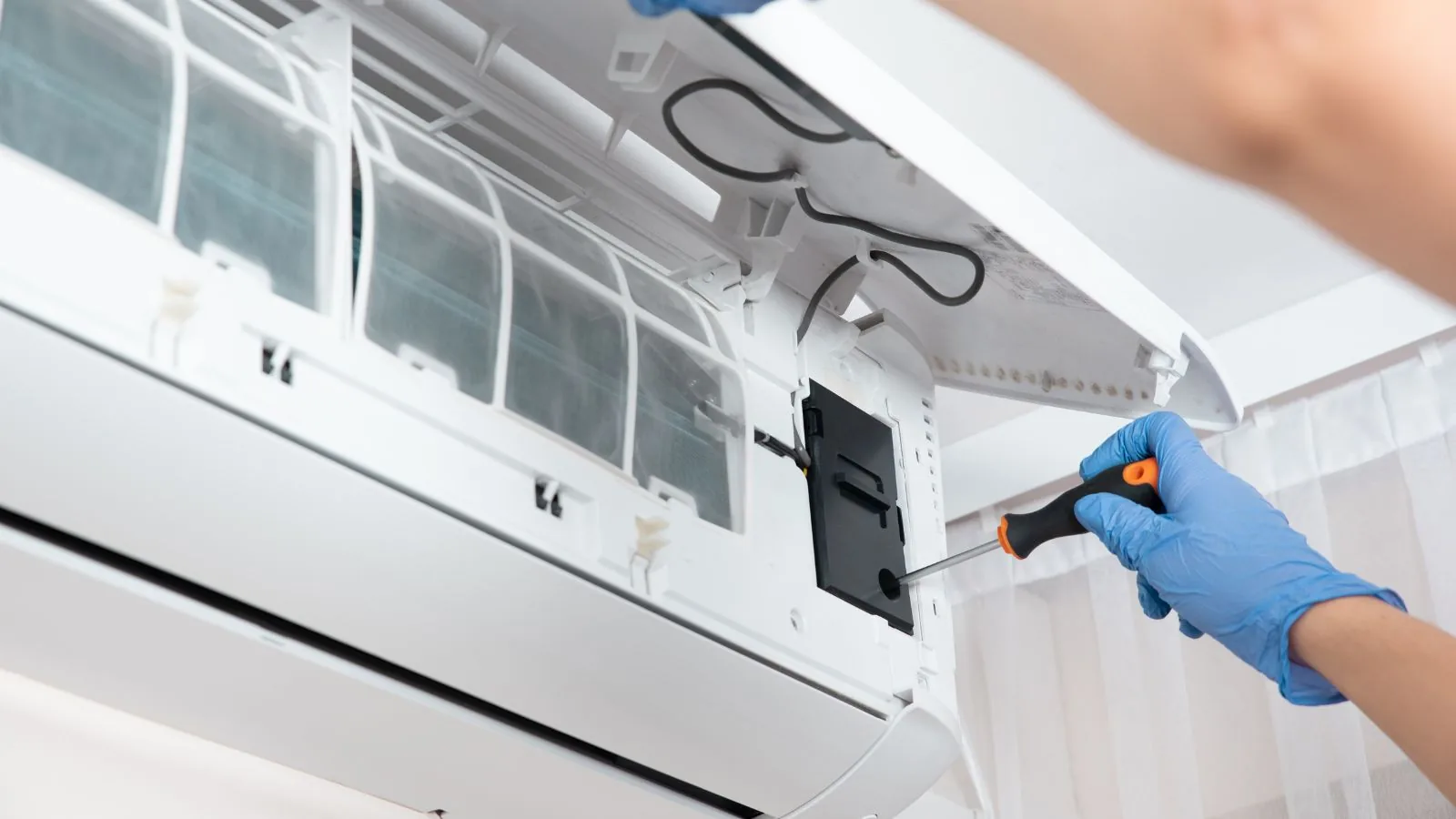
AC leak water damage is the harm done when condensate from an air conditioner escapes its drain path. Cooling systems pull moisture from the air, and when the drain line clogs, the pan overflows, or a connection loosens, that water runs into ceilings, closets and walls.
The air handler often sits in an attic or a closet, so the first sign is typically a stain on a ceiling below it or a wet spot at the base of a closet wall.
Turn off the system at the thermostat and the breaker before you call.
Why AC systems leak
The usual cause is a clogged condensate drain line. Algae and debris build up, water backs into the pan, and the pan overflows or the secondary drain line starts to drip. Cracked pans, loose fittings and failed float switches are other causes.
Systems that run heavily during hot spells produce a lot of condensate, which is why a leak that was small in spring can become large in summer.
A plumber or HVAC technician clears the drain and repairs the fault, and the restoration side begins after the system is off.
Signs of an AC water leak
Ceiling stains below an attic unit
A brown or yellow ring that grows after the system runs.
Wet closet floor or wall base
Water at the base of an air handler closet that spreads into carpet.
Dripping from a vent or register
Condensation or overflow dripping at a supply vent.
Musty odor near the unit
A damp smell near the air handler suggests long-running moisture.
Stain growing on the ceiling?
Turn the AC off and call. A crew can be sent today when available.
Stop the leak first
Shut off the AC at the thermostat and the breaker. A running system keeps producing condensate, and a failed drain turns that into more water.
Place a bucket or towels under a drip, and take photos of the stain, the unit and the drain area. If the ceiling is sagging or bulging, keep people away from underneath it and do not poke it, since stored water can release suddenly. The ceiling water damage page covers that case.
How drying and repair work
Crews check the ceiling, insulation and framing with moisture meters and thermal imaging. Wet insulation is removed, damaged drywall is cut out, and the cavity is dried with air movers and dehumidifiers.
The wall and drywall page describes what happens to opened sections, and the structural drying page explains the equipment used.
Water from an AC pan can pick up dust and algae from the pan itself, and crews treat the area with that in mind. Long-running leaks can also leave odors that need attention.
Preventing a repeat
Have the condensate drain cleared on a routine schedule, add a float switch that shuts the system off when the pan fills, and consider a secondary pan under an attic unit. These items cost far less than a ceiling repair.
Condensate lines, pans and switches
An air conditioner removes moisture from the air as it cools. That water collects in a pan and drains through a small line, often a three-quarter inch PVC pipe. Algae and debris narrow the pipe over time, and the water backs up.
Many systems have a secondary pan and a float switch that shuts the unit off if the pan fills. When those fail or were never installed, the overflow reaches the ceiling or floor below.
The restoration crew does not service the unit, but it can tell the HVAC technician what it found, which speeds the repair.
Document the leak and cut down on repeats
Photograph the pan, the drain line, the stain and the date. Note when the system last ran and whether the thermostat was set to cool. That record helps an insurer see that the leak was sudden or gradual.
Have the drain line flushed each spring, install a float switch if there is none, and keep the area around the air handler clear. A slow weekly drip is a warning that the next one will be larger.
If the system is in the attic, check the ceiling below on the first hot day of the year. Catching a stain early keeps the repair small.
Safety checklist before the crew arrives
- Switch the system off at the thermostat
- Do not touch wet wiring near the air handler
- Place a bucket under the drip and photograph the pan
- Check the ceiling below an attic unit for stains
- Call an HVAC technician to clear the drain line
Drying after an air conditioner leak follows ANSI/IICRC S500, and the crew documents readings the same way.
What sets the price
| What changes the price | Why it matters |
|---|---|
| Where the unit sits | Attic units soak insulation and ceilings, while closet units wet carpet and wall bases. |
| Duration | A slow weekly drip differs from one overflow. |
| Materials | Insulation and drywall are usually replaced when stained and soft. |
| Drying days | Cavities dry more slowly than open floors. |
| Repair scope | The AC repair itself is separate from restoration. |
Insurance treatment of a sudden overflow versus a long-running drip differs, so check your policy and ask your insurer. Call (559) 597-1434 to hear the scope and the price for your overflow before the crew starts.
Serving the area
The line covers Madera and also reaches Chowchilla.
Questions About AC Leak Water Damage in Madera
Do you fix the air conditioner itself?
No. An HVAC technician repairs the system. The restoration crew dries and repairs the water damage it caused.
Can I keep running the AC?
Shut it off at the thermostat and breaker until the drain is fixed, since a running unit keeps adding water.
What if the ceiling is sagging?
Keep people away from underneath, do not poke the bulge, and call. Trapped water can release suddenly.
Is AC leak damage covered by insurance?
Coverage varies by policy and by whether the leak was sudden. Check your policy or ask your insurer.