
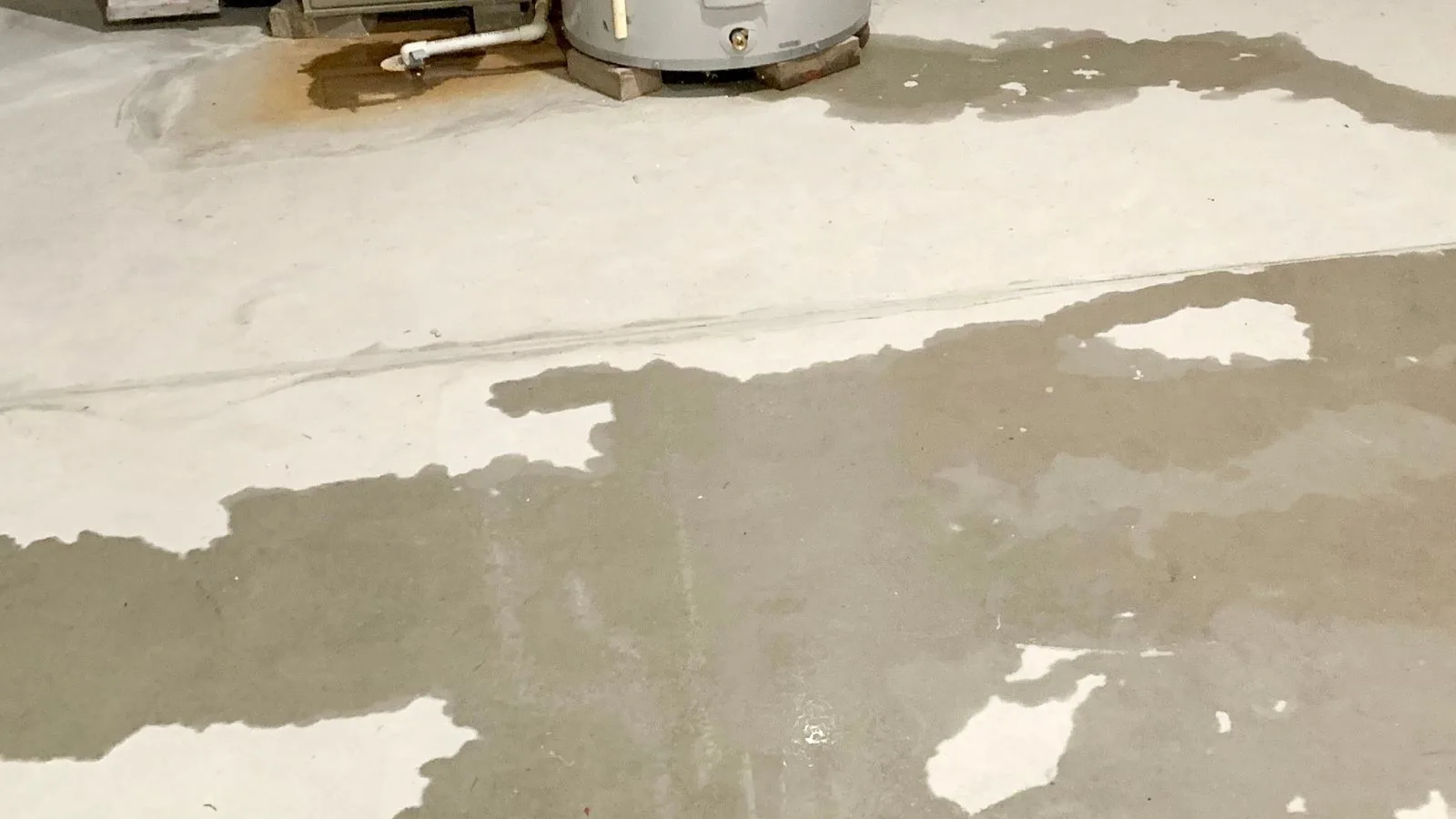
Basement water damage is water in the below-grade part of a home, where gravity collects it and drainage is limited. The source can be a failed sump pump, groundwater pressing through a wall or floor, a water heater, or a pipe that fails upstairs and drains down.
Basements are not a given in every Madera home, so the page applies to any lower level, below-grade garage, cellar room or finished lower space.
Stay out of a flooded lower level until the power question is settled, then call.
When a flooded basement is an emergency
Water in a basement is an emergency because it can rise, and because panels, outlets and appliances are often low. If water is touching outlets or the panel, do not go down. Call the utility or 911, and call the restoration line afterward.
If the sump is off, check its breaker only from dry ground. Move boxes and furniture off the floor if you can do so safely from dry stairs.
Take photos of the water line on walls, because the height of the water helps describe the loss.
What fills a lower level
Sump failure
A pump that fails during heavy rain or a power outage lets groundwater rise.
Seepage
Water pressing through walls or the floor slab after prolonged wet weather.
Plumbing
A water heater or supply line failure upstairs drains down.
Surface runoff
Water entering through window wells or doors during storms.
Madera County is the flood control agency for the area, and the Madera Irrigation District warned in 2023 that breaks can occur on properties next to streams and creeks. Check the FEMA flood map for your address to see your exposure.
Water in the lower level?
Avoid electrical hazards and call. A crew can be sent today when available.
What restoration does and does not do
Restoration removes water, dries the structure and handles damaged materials. It is not waterproofing. If water keeps coming in, the cause has to be fixed by the right trade, such as drainage work or a sump replacement.
Callers sometimes ask for foundation inspection or waterproofing. That is a different specialty, and an honest contractor will say so.
How cleanup is done
Pumps and extraction units remove standing water, then crews pull wet carpet and pad, cut out wet drywall above the water line and move contents. Air movers and LGR dehumidifiers dry the slab and framing.
Extract
Remove standing water with pumps and extraction units.
Sort
Separate salvageable contents from ruined items.
Dry
Run dehumidifiers and air movers until readings are dry.
Restore
Rebuild finishes and flooring.
Water that rose from the ground is usually not clean, which changes how it is handled. The flood damage page explains water categories, and the carpet page covers wet carpet decisions.
Mold and time
Wet materials left in a closed lower level stay damp for a long time. Fast drying is the main protection, and ANSI/IICRC S500 sets the standard for how it is done.
Contents, finished spaces and what to move
Lower levels often hold storage, a home gym, a media room or a guest bedroom. Cardboard boxes, books, photographs and fabric are the first casualties, and they wick water up from the floor. Move what you can to a dry place, but only from dry stairs, and wear boots and gloves.
In a finished basement, drywall, insulation, baseboards and carpet are all in play. Crews cut out wet drywall above the water line, remove insulation and dry the studs and slab. Paneling and built-ins need individual decisions.
Make a list of damaged items with photos before throwing anything out, since an insurer may ask for it.
Sump pumps and backup power
A sump pump is a mechanical part that fails when it is needed most. Test yours with a bucket of water before the wet season, check the discharge line and consider a battery backup in case of an outage.
If your pump failed, do not replace it with the same model without looking at why it failed. A stuck float, a clogged intake or an undersized pump are different problems with different fixes.
A plumber or drainage contractor handles sump work. The restoration crew handles the water and the drying.
Safety checklist before the crew arrives
- Stay off the stairs if the water is near outlets or the panel
- Do not enter a basement with standing water while appliances are plugged in
- Never run a gas generator indoors
- Photograph the water line on the walls
- Move boxes only from dry steps
What sets the price
| What changes the price | Why it matters |
|---|---|
| Water depth and category | Deeper or dirtier water means more removal and disposal. |
| Finished or unfinished | Finished walls, floors and trim add materials to remove and replace. |
| Contents | Moving and sorting belongings adds labor. |
| Drying days | Slabs and block walls dry slowly. |
| Cause repair | Sump or plumbing repair is separate. |
Flood damage is often excluded from standard homeowners policies and may need separate flood coverage, while sudden plumbing losses may be covered. Check your policy and ask your insurer. Call (559) 597-1434 to get a real figure for your lower level, with the scope and price set out beforehand.
Where we work
The line covers Madera and Chowchilla, and the water extraction page covers standing water elsewhere in the home.
Questions About Basement Water Damage in Madera
Do you handle basement flooding emergencies at night or on weekends in Madera?
Yes. Lower levels can flood at any hour, so the line is answered around the clock and a crew is sent the same day when one is available.
Is cleanup the same as waterproofing?
No. Restoration dries and repairs. Stopping repeat water entry is a separate trade.
Is the water safe to touch?
Water from the ground or a storm is often contaminated. Avoid contact and wear protection until it is removed.
Does insurance cover flood water?
Flood is usually excluded from standard policies. Check your policy or ask your insurer about flood coverage.