
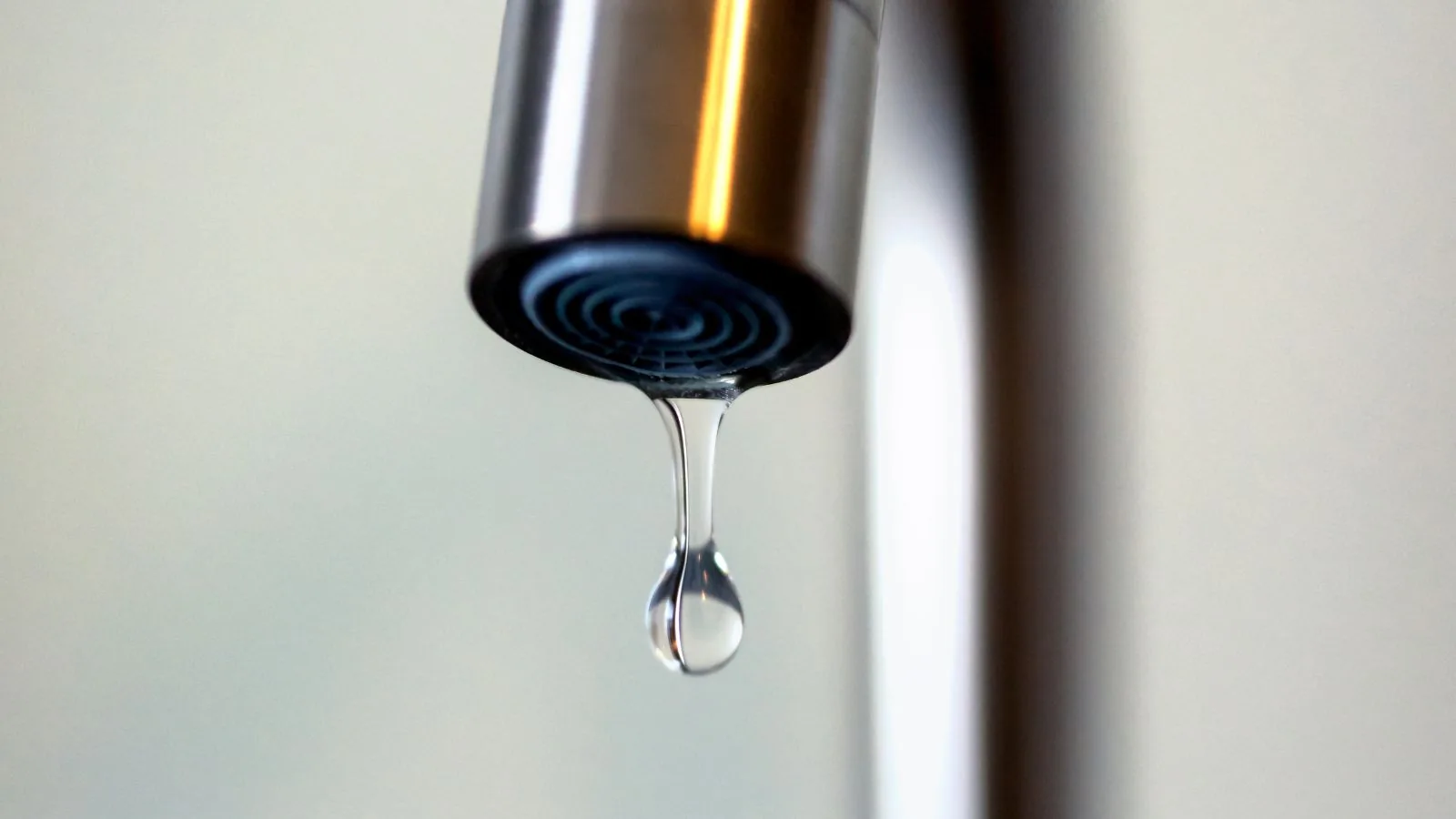
Kitchen water damage is the harm from leaks at the sink, dishwasher connection, supply lines and drain traps, plus water that spreads across flooring. Cabinets are the biggest issue, because most are made of wood products that swell when wet.
Appliance failures are covered on the appliance leak page, and this page focuses on cabinets, counters and the sink zone.
Close the shut-off valves under the sink and call.
Symptom first: signs under the sink
Swollen cabinet base
Particleboard swells and peels when wet.
Musty smell under the sink
Odor points to slow leaks.
Stains on the floor
Flooring near cabinets discolors or lifts.
Warped doors
Moisture warps doors and frames.
When a kitchen leak is an emergency
Active water under the sink is urgent. Turn the angle stops off, and the main valve if needed. Empty the cabinet and photograph it.
Keep electrical cords and appliances away from the water. Unplug the dishwasher if it is involved.
Cabinet soaked?
Call for drying. A crew can be sent when available.
Why kitchens flood quietly
Slow drips from traps and connectors can run for weeks in a closed cabinet. The City of Madera draft housing element reports that about a third of the city's housing units were built between 2000 and 2009, and kitchens from those years often use particleboard cabinet bases that do not survive soaking.
Check under every sink twice a year, and replace corroded supply lines.
How restoration works
Crews check with meters, remove wet toe kicks and damaged cabinet bases, and dry the floor and wall cavity. Solid wood cabinets sometimes dry in place, while particleboard usually does not.
Inspect
Meters find hidden moisture.
Remove
Take out soaked cabinet bases.
Dry
Air movers and dehumidifiers.
Rebuild
Replace cabinets and flooring as needed.
Wall water is handled as on the wall and drywall page, and equipment on the structural drying page.
Replace or dry in place
Cabinets that are intact and made of solid wood may be dried. Swollen particleboard is replaced. Granite and stone counters usually stay, and the cabinets below them are the costly part.
Cabinets, counters and the sink zone
The sink base cabinet takes the first hit in most kitchen leaks, and it usually has a thin floor and no sealed edges. Water lingers there, wicks into the toe kick and runs under neighboring cabinets, which is why the damage often looks worse a week later than on day one.
Countertops rarely need replacement, but a sink or cooktop cutout can hide moisture in the edge of the substrate. Crews check the underside of the counter, the back wall behind the cabinet, and the floor under the dishwasher.
Plumbing penetrations through the wall and floor are a common place for water to travel. A drip from the drain trap can show up in the next room.
Practical steps and what to ask
Empty the cabinet, close the angle stops, and set a towel and a bowl to catch drips. Photograph the damage, the supply lines and any corrosion. Do not run the dishwasher or the disposal until a plumber has looked at the source.
Ask whether cabinet bases will be replaced like for like, and whether matching door styles are available. Ask whether flooring that continues under the cabinets has to come up. These answers decide the scope and keep the rebuild from surprising you.
Replacing old braided supply lines and corroded angle stops is cheap insurance. If your kitchen is older, it is worth doing that when the cabinets are open.
Safety checklist before the crew arrives
- Close the angle stops under the sink
- Turn off the dishwasher and the disposal
- Keep power off to any outlet near standing water
- Empty the sink cabinet and photograph the base
- Do not eat food that was in contact with dirty water
The drying approach follows ANSI/IICRC S500, and it is fair to ask whether your crew works to it.
What sets the price
| What changes the price | Why it matters |
|---|---|
| Cabinet material | Solid wood and particleboard differ. |
| Linear feet | More cabinets raise cost. |
| Flooring | Tile, vinyl and wood respond differently. |
| Drying days | Follow readings. |
| Plumbing repair | Separate from restoration. |
Insurers often treat sudden leaks differently from slow ones, so check your policy and ask your insurer. Call (559) 597-1434 to get the scope and price for your kitchen explained before work starts.
Where we work
The line covers Madera and Chowchilla.
Questions About Kitchen Water Damage in Madera
Can swollen cabinets be saved?
Solid wood sometimes. Particleboard usually must be replaced.
Do you handle kitchen water emergencies at night?
Yes. The line is answered at night too, and a crew is sent the same day when one is available.
Do you replace cabinets?
Rebuild scope is planned after drying and explained before work starts.
Is it covered?
Sudden leaks often are, slow ones often are not. Check your policy.