
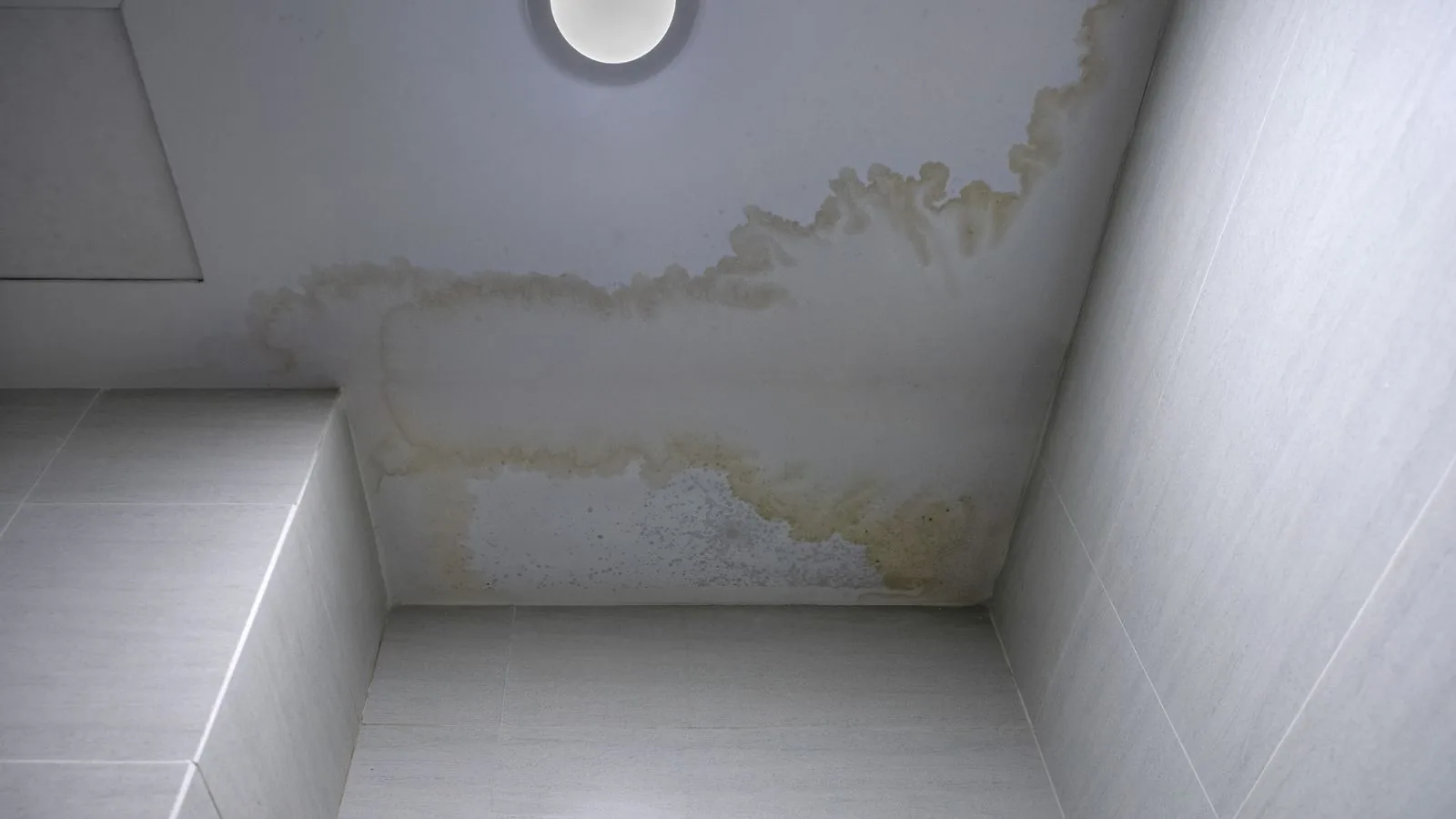
Ceiling water damage is the staining, softening and sagging of a finished ceiling after water collects above it. The source can be a roof leak through decking and insulation, a supply line or drain upstairs, or an air handler in the attic, and the page you are on owns all of those because the ceiling repair is the same.
A ceiling that bulges or drips is holding water. That water has weight, and drywall that is saturated can fail suddenly, so keep people and pets out from underneath.
Call the 24/7 line, and a crew can be sent the same day when one is available.
When a leaking ceiling is an emergency
A ceiling that is actively dripping, bulging or sagging is an emergency. Move furniture and valuables out of the area, and set a bucket under the drip. If a bulge is forming, a small hole at its lowest point can let the water out in a controlled stream into a bucket, but only if you can do it from the side and not directly beneath.
Turn off power to any light fixture or fan in the wet area, and do so from the breaker. If water is running through a recessed light, treat it as an electrical hazard and keep away.
Photograph the stain from several angles before anything is moved. If the source is upstairs plumbing, close that fixture's shut-off valve or the main valve.
Symptom first: reading a ceiling stain
Brown ring with a darker edge
A ring that grows after rain or after the upstairs shower is running points to the source.
Sagging or bulging drywall
Saturated board loses strength and can drop, so it should come down in a controlled way.
Peeling or bubbling paint
Moisture behind the surface lifts paint and tape joints.
Drip with no rain
Plumbing, HVAC condensate or condensation in the attic is the likelier cause.
A stain that appears only in wet weather points to the roof. A stain that grows on dry days points to plumbing or an air handler.
Ceiling bulging?
Keep clear and call. A crew can be sent today when available.
Roof leaks that end up on the ceiling
Roof leaks have no page of their own on this site, because the damage a homeowner sees is the ceiling. Water enters at a flashing, a worn shingle or a penetration, runs along the decking and insulation, and shows up several feet from where it entered.
The 2023 winter storms led California to declare a state of emergency that included Madera County, according to the state emergency services office, and storm seasons like it test roofs. A roofer repairs the entry point, and the restoration crew removes wet insulation, opens damaged drywall and dries the framing.
Do not wait for a dry spell to deal with a wet attic. Insulation that stays wet holds moisture against the ceiling and rafters.
How repair and drying are done
Crews check the ceiling and attic with moisture meters and thermal imaging, then remove soft or stained drywall and wet insulation. Air movers and dehumidifiers dry the framing, and readings are logged.
Contain
Stop the source and relieve trapped water.
Open
Remove saturated drywall and insulation.
Dry
Run air movers and dehumidifiers until framing is dry.
Repair
Patch, texture and paint the ceiling.
The same logic applies to walls, as described on the wall and drywall page. The drying process follows ANSI/IICRC S500 and is explained on the structural drying page.
Housing age and ceiling repairs
The City of Madera draft housing element reports that about 47 percent of units predate 1980. Older ceilings may include textured finishes and materials that call for care when disturbed, so ask the contractor about testing before demolition in an older home.
Choosing who handles which part
A ceiling leak usually needs three trades at different times. A roofer or plumber fixes the source, the restoration crew dries and removes damaged material, and a drywall finisher or painter restores the surface. Sequence matters, since a ceiling patched before the source is fixed will stain again.
Ask your restoration crew which parts of the job they handle and which need other contractors. Ask for the plan in writing, with the order of work and who coordinates.
Safety checklist before the crew arrives
- Keep out from under a bulging or sagging ceiling
- Poke a small drain hole only if a professional tells you to, with a bucket below
- Switch off lights and fans on the wet circuit
- Move furniture and photograph the stain
- Check the attic only from the hatch
What sets the price
| What changes the price | Why it matters |
|---|---|
| Ceiling area | A single stain differs from a whole room of drywall. |
| Insulation | Wet attic insulation is removed and replaced. |
| Finish | Texture matching and painting add to repair work. |
| Drying days | Attic cavities dry more slowly than open rooms. |
| Source repair | Roof or plumbing repair is separate from restoration. |
Insurers often cover sudden roof or plumbing leaks and exclude long-term seepage, so check your policy and ask your insurer. Call (559) 597-1434 for the scope and price of your ceiling, explained before anyone opens it up.
Where we work
The line covers Madera and Chowchilla, and the storm water damage page covers wider storm losses.
Questions About Ceiling Water Damage Repair in Madera
Do you handle ceiling leak emergencies at night or on weekends in Madera?
Yes. Ceiling leaks tend to show up during storms and at odd hours, and the line is answered 24/7 with a crew sent the same day when available.
Can a sagging ceiling be saved?
Often it must be cut out, because saturated drywall loses strength. The crew decides on site.
Do you fix roofs?
No. A roofer repairs the roof. The restoration crew dries and repairs the ceiling and attic damage.
Will insurance cover it?
Sudden leaks are often covered and slow seepage often is not. Check your policy or ask your insurer.