
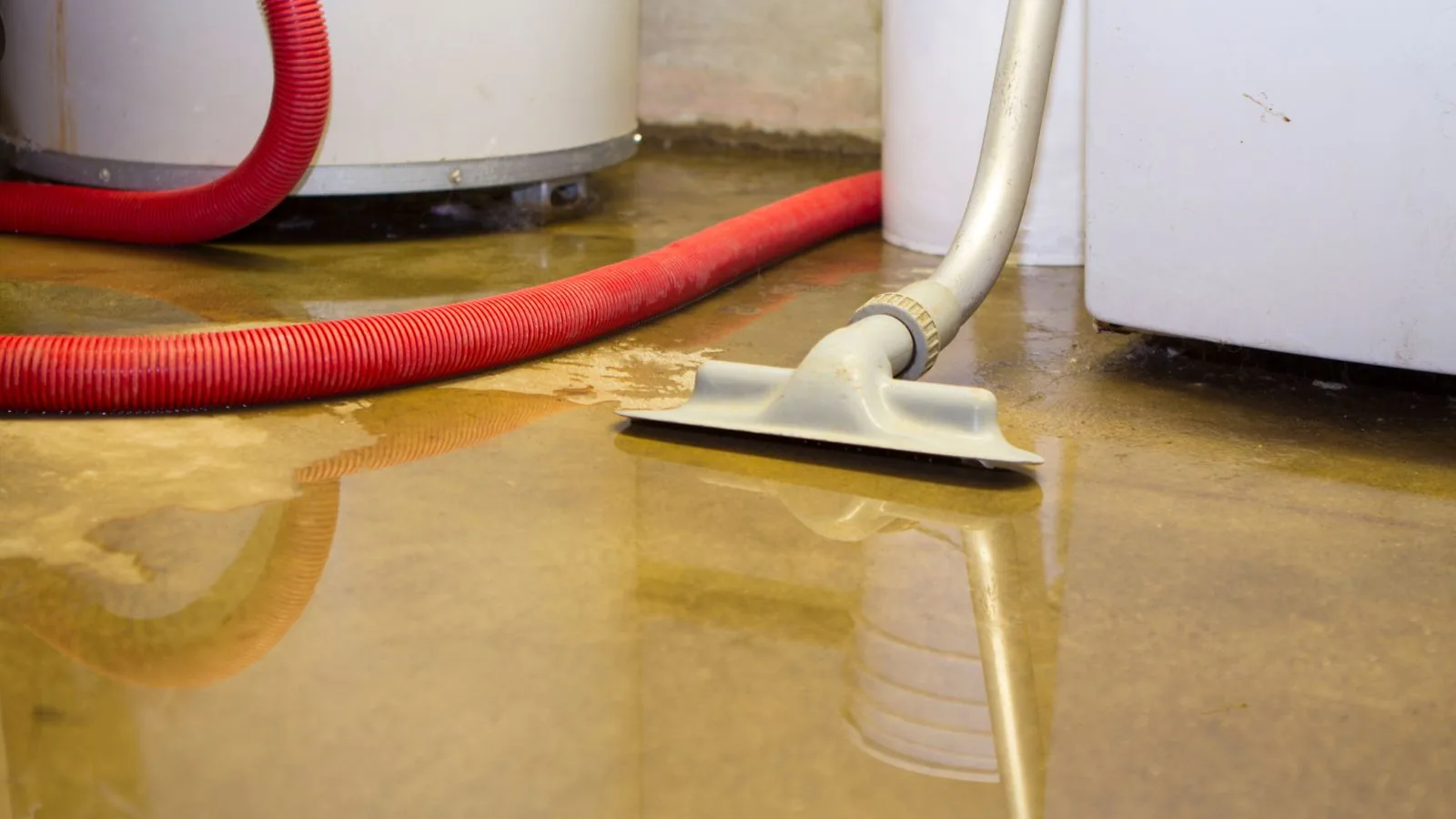
Appliance leak water damage is what a failed supply hose, drain line or internal part leaves behind. A washing machine hose can release gallons a minute, a dishwasher drain can seep for weeks, and a refrigerator ice maker line can drip into a floor unseen.
This page is about the appliance as the source. Water under the sink or inside cabinets belongs with the kitchen water damage page, and a water heater has its own page.
Turn off the appliance and its water supply first, then call.
When an appliance leak is an emergency
A washer that overflows or a supply hose that has let go is an emergency. Unplug the appliance if the cord is dry, close the angle stop or wall valve behind it, and shut the main water valve if the stop will not turn.
Move the appliance out only if it is safe to do so, since a full washer is heavy and the floor may be slick. Keep electrical cords out of standing water.
Mop or towel up what you can while you wait, and photograph the hose, the valve and the wet floor. A crew arrives the same day when one is available.
Which appliances leak and how
Washing machines
Burst or loose supply hoses, clogged drain standpipes and overflow cause the largest releases.
Dishwashers
Door seals, inlet valves and drain connections leak slowly into cabinets and flooring.
Refrigerators
Ice maker lines and drain pans leak behind the unit, often unnoticed for weeks.
Other units
Humidifiers, softeners and utility sinks add smaller but real sources.
Hose burst or unit overflowed?
Close the valve and call. A crew can be sent today when available.
Why home age matters
The City of Madera draft housing element reports that about 33 percent of the city's housing units were built between 2000 and 2009. Appliance connectors and supply lines installed in those years are often past the age where manufacturers suggest replacing them.
Braided connectors and rubber hoses are the usual failure points, and replacing them on a schedule costs far less than the cleanup after one fails.
If you are unsure how old a hose is, check for bulges, rust at the fittings or crusty mineral deposits, and replace it.
How the cleanup works
Crews extract standing water, then check flooring, subfloor and the base of nearby walls with moisture meters. Hidden moisture behind a dishwasher or refrigerator is common, so equipment is often set under and around the appliance location.
Extract
Remove standing water from the floor and under cabinets.
Inspect
Meters find moisture behind appliances and in subfloor.
Dry
Air movers and dehumidifiers run until readings are dry.
Rebuild
Flooring and trim are replaced where needed.
Flooring decisions follow the same logic as on the hardwood floor page and carpet page, and the equipment is explained under structural drying.
Prevention steps
Replace rubber washer hoses with braided connectors, turn the washer valves off after use, and leave a few inches of space behind the unit so a leak is visible. A leak-sensing pad or sensor under the dishwasher and refrigerator costs little and gives an early warning.
Spotting a leak before it spreads
Watch for a damp spot on the floor near a washer, a musty smell in a laundry room, or a dishwasher that leaves water at the base. Peel back the baseboard behind a refrigerator and look for staining. Check the water bill for sudden jumps.
Leak detectors cost little and chirp when they get wet. Put one under the washer, the dishwasher and the refrigerator, and one near the water heater. They give you minutes of warning instead of days.
Safety checklist before the crew arrives
- Shut the supply valve behind or under the appliance, then unplug it only if the cord and outlet are dry
- Do not open a dishwasher or washer door that is holding water
- Pull the appliance out only if the floor is dry enough to stand on
- Photograph the hose, the valve and the floor before cleanup
- Keep pets away from any detergent in the water
Crews working to ANSI/IICRC S500 treat the hidden moisture behind and beneath the appliance as part of the job.
What sets the price
| What changes the price | Why it matters |
|---|---|
| How long it leaked | A slow seep dries differently from a burst hose that ran for hours. |
| Floor and subfloor | Vinyl, laminate and plywood hold water in different ways. |
| Cabinets | Particleboard bases swell and often need replacement. |
| Water category | A clean supply line differs from a dirty drain overflow. |
| Drying days | Equipment time follows moisture readings. |
Insurers usually treat a sudden hose failure differently from long-term seepage, so check your policy and ask your insurer. Call (559) 597-1434 to get the scope and price for your washer, dishwasher or fridge line before work begins.
Nearby service
The same line covers the whole city and Chowchilla.
Crews also work Parksdale, northwest of the city, where kitchen and laundry leaks are the usual cause of a loss.
Questions About Appliance Leak Water Damage in Madera
Do you handle appliance leak emergencies at night or on weekends in Madera?
Yes. Hoses and drain lines often fail overnight, and the 24/7 line is answered at those hours, with same-day crews when available.
Should I move the appliance?
Only when it is safe. Shut off its water and power first, and avoid dragging a heavy unit across a wet floor.
Does drying include the area under the appliance?
Yes. Moisture often hides under and behind washers, dishwashers and refrigerators.
Is an appliance leak covered?
Sudden failures are often covered and slow seepage often is not. Check your policy or ask your insurer.