
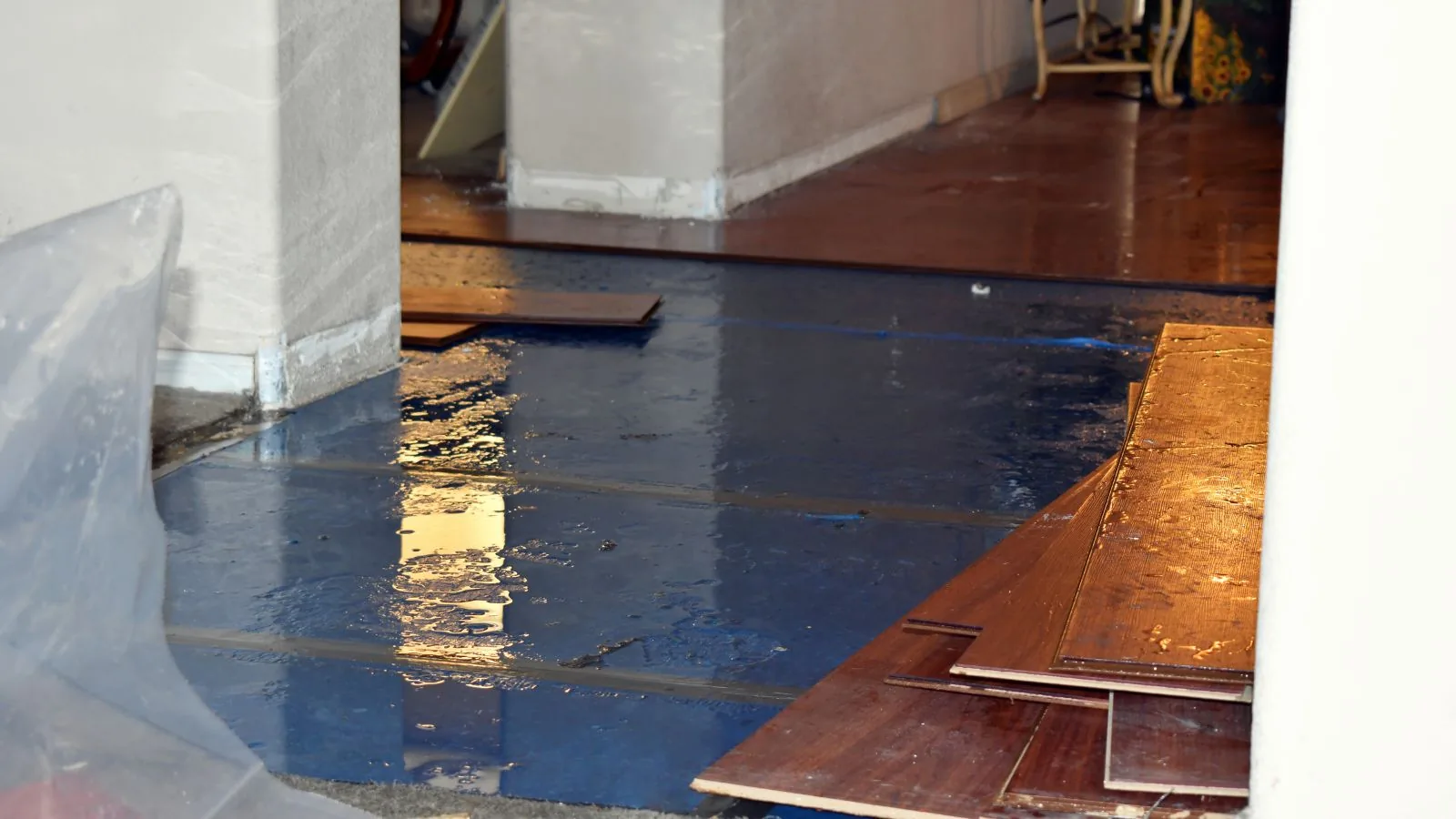
A slab leak is a break in a water line that runs under or inside a concrete foundation slab. Water finds its way up through cracks, joints and around plumbing penetrations, so the first sign is usually a damp floor, a warm tile or a water bill that jumped.
Restoration and plumbing are separate jobs here. A leak detection and repair company locates and fixes the line, and the restoration crew dries the flooring, walls and subfloor that the water reached.
If you find water on the floor and suspect the slab, shut off the main valve and call.
If you think a slab leak is the cause
Many homeowners know a slab leak only by its symptoms, such as hot spots on a floor or the sound of running water with everything off. The next section describes the signs in plain words.
Shut off the main valve to confirm. If the meter stops moving and the dampness stops spreading, the line under the slab is the likely source, and a leak detection company can pinpoint it without opening the whole floor.
Symptom first: what a slab leak looks like
Warm patches underfoot
A hot water line leaking under the slab can warm a section of flooring.
Damp carpet or lifting flooring
Moisture rising from below swells laminate, loosens tile and soaks carpet from beneath.
Running water sounds
Water noise with every fixture off suggests a pressurized leak.
High water bill
A usage jump with no change in habits points to a hidden leak.
None of these prove a slab leak by themselves, and a plumber with detection tools settles the question.
Floor wet from below?
Shut the main valve and call. A crew can be sent today when available.
When slab leak water is an emergency
Water coming up through the floor is an emergency because it keeps spreading under flooring and into baseboards. Shut off the main valve, move rugs and small furniture out of the wet area, and call the 24/7 line.
Keep electrical cords and devices away from wet floors. If water is near an outlet or panel, call the utility or 911 first.
Do not run a wet-dry vacuum plugged into a damaged circuit, and do not step on flooring that is actively lifting.
Why slab leaks happen, and what to check
Lines under a slab can fail from corrosion, shifting soil, abrasion against gravel or old fittings. Homes with a concrete slab foundation have this risk, and the county assessor record or your original plans will say what your foundation type is.
Whether a particular area has more slab-on-grade homes than raised foundations is not something this page can assert, so treat the question as one to confirm for your own address.
The City of Madera Water Division reports more than 200 miles of distribution pipe. A leak that starts on the street side of the meter is the City's concern, while a leak under your house is private.
How cleanup works after a slab leak
Crews extract any standing water, pull wet carpet and pad when needed, and open baseboards and low drywall to dry framing. Moisture meters track what is wet, and the slab is dried with air movers and dehumidifiers.
Confirm the source
Plumbing detection locates the break.
Extract and open
Water is removed and wet bottoms of walls are opened.
Dry
Air movers and dehumidifiers dry the slab surface and framing.
Rebuild
Flooring and drywall are replaced after readings are dry.
Hard flooring is often dried in place when caught early, while flooring that was wet from below for a long time may be replaced. The hardwood floor page and the carpet page describe that decision.
Safety checklist before the crew arrives
- Close the main valve and watch whether the meter stops
- Keep off a floor that feels hot or soft
- Do not dig or drill to find the line, and call Underground Service Alert before any digging
- Photograph wet spots and any cracks
- Call a plumber to locate the leak before flooring is removed
How the work is measured
Once the line is repaired, the drying follows ANSI/IICRC S500, the published standard for water damage restoration. Moisture readings in the flooring and subfloor are compared with a dry reference, and a crew should be able to show you those numbers before equipment leaves.
What sets the price
| What changes the price | Why it matters |
|---|---|
| How long it leaked | Long-running leaks soak more flooring and framing than a fresh break. |
| Flooring type | Tile, wood, laminate and carpet each dry or fail differently. |
| Wall involvement | Water wicking up drywall adds cutting and rebuild work. |
| Slab access | Detection and repair of the line is separate from drying. |
| Drying days | Equipment time depends on moisture readings. |
Coverage for a hidden leak varies widely by policy, and slow leaks are often excluded, so check your policy and ask your insurer what applies. Call (559) 597-1434 for a number that fits your slab and your floors, with the scope laid out first.
Serving Madera and nearby towns
The 24/7 line covers the city and reaches Chowchilla. Restoration pairs well with the burst pipe page when the break is above the slab instead of below it.
Questions About Slab Leak Water Damage in Madera
Do you handle slab leak emergencies at night or on weekends in Madera?
Yes. A hot spot or a wet floor at 3 a.m. is still an emergency, and the line is answered 24/7 with a crew sent the same day when available.
How do I know if the leak is under the slab?
Warm floor spots, running water sounds and a spinning meter with everything off are signs. A leak detection company confirms it.
Do you repair the pipe under the slab?
Locating and repairing the line is a plumbing job. The restoration crew dries and restores the damaged floors and walls.
Is a slab leak covered by insurance?
Coverage varies, and slow leaks are often excluded. Check your policy or ask your insurer.