
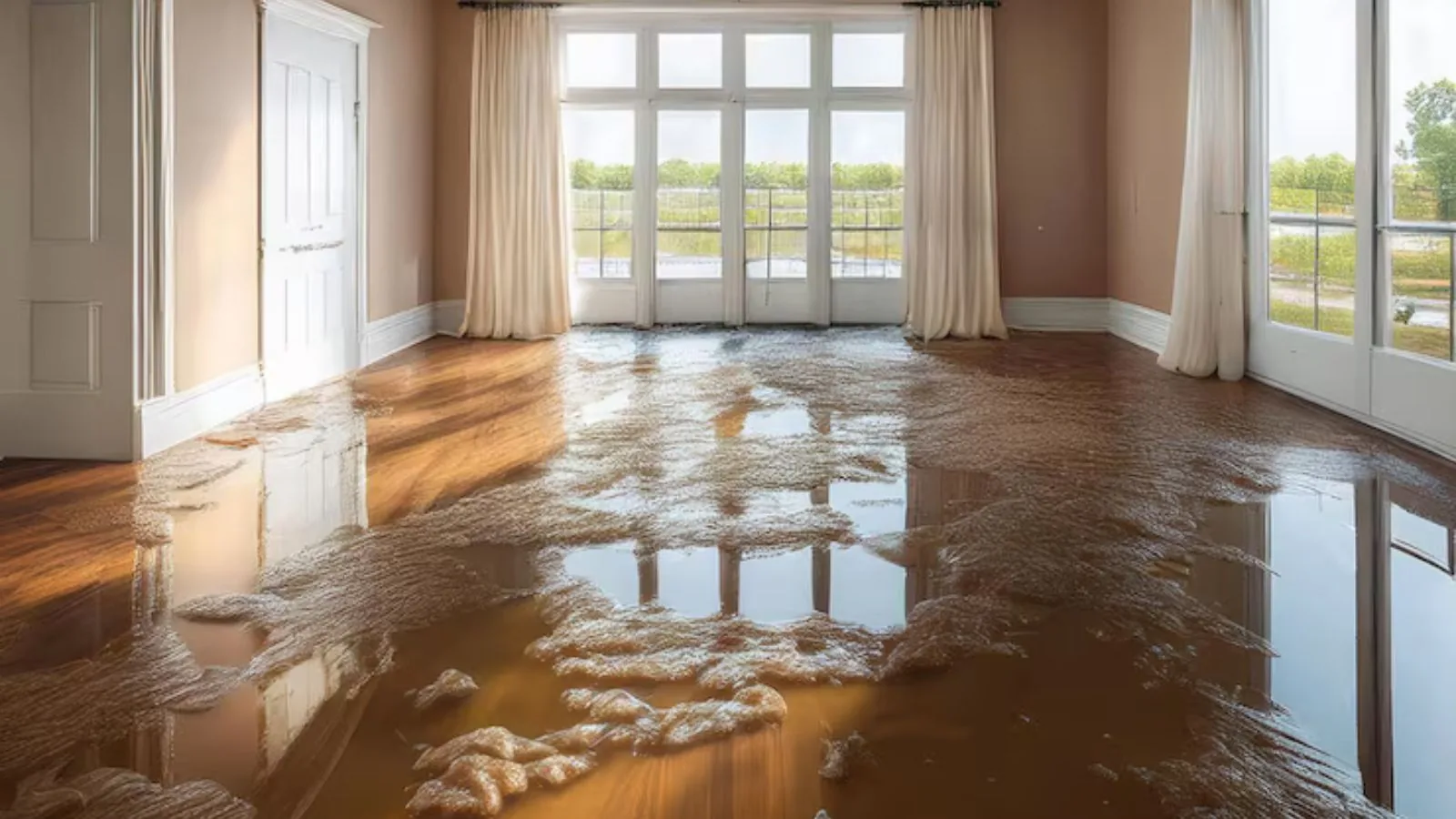
Flood damage restoration is the removal, cleaning and drying work after outside water enters a building. Unlike a burst pipe, flood water comes from rivers, creeks, groundwater or runoff, and it usually carries soil and contaminants, which makes it Category 2 or 3 water.
That classification changes everything about the job, from the protective gear to which materials can be saved. Porous items that flood water touched are usually discarded.
If water is entering the home, get people and pets to safety first and call 911 for any rescue need. Then call the 24/7 line.
When flood water is an emergency
Flood water is an emergency from the first inch. Stay out of rising water, turn off power at the main only if the panel is dry and reachable, and never walk through moving water. Do not drive through flooded roads.
Avoid contact with the water, which may carry sewage and chemicals. Keep children and pets out, and wash skin that touches it.
Photograph the water line and damaged items before moving them. Flood claims rely on documentation.
Flood risk around Madera
The Fresno River passes north of downtown Madera, and the Madera Irrigation District reported in 2023 that releases from Hensley Lake into the river were 2,500 cubic feet per second during a period of expected high runoff. The district also warned that breaks can occur, particularly on properties next to streams and creeks.
The state's 2023 storm proclamation named Madera County, which tells you the area has seen storm events serious enough for emergency action. For your own address, check the FEMA flood map and ask the county, which is the flood control agency for the area.
Knowing your exposure helps you decide on coverage, since standard homeowners policies usually exclude flood.
Flood water inside?
Get to safety and call. A crew can be sent today when available.
Water categories and what they mean
| Category | Typical source | What it means for cleanup |
|---|---|---|
| Category 1 | Clean supply line water | Dry in place is often possible. |
| Category 2 | Gray water, such as washer overflow or aged clean water | Porous materials often removed, area cleaned. |
| Category 3 | Flood, sewage, surface water | Porous materials removed, full disinfection, protective gear. |
Flood water is treated as Category 3 in most cases, which is why the response is different from a plumbing leak. The sewage backup page covers contaminated water inside the home.
How flood cleanup works
Crews wear protective gear, pump out standing water, and remove carpet, pad and wet drywall that flood water touched. Hard surfaces are cleaned and disinfected, and then structural drying begins.
Safety
Check power, gas and structure before entry.
Extract
Pump and extract contaminated water.
Remove
Take out porous materials that cannot be cleaned.
Clean and dry
Disinfect, then dry with air movers and dehumidifiers.
The process follows ANSI/IICRC S500. The structural drying page explains the equipment, and the basement page covers lower levels.
Keep, clean or throw away
Solid wood furniture and hard surfaces can often be cleaned and dried. Upholstery, mattresses, carpet pad and particleboard that sat in flood water are usually discarded.
Sort items with a crew and document before disposal, because an insurer may want to see or count them.
Staying safe in a flooded home
Do not wade through flood water if you can avoid it. It may hide sharp objects, open drains and electrical hazards. Wear boots and gloves if you must enter, and never touch wet electrical equipment.
Do not eat food that touched flood water. Do not use tap water for drinking or cooking if your utility has issued a notice. Wash hands with clean water after contact.
Carbon monoxide can build up if generators or pumps run in enclosed spaces, so keep them outside and away from windows. If anyone feels dizzy or ill, get to fresh air and call 911.
Safety checklist before the crew arrives
- Treat flood water as contaminated
- Do not drive or wade through moving water
- Keep gas and generators outdoors
- Photograph the high-water line
- Discard food that touched the water
What sets the price
| What changes the price | Why it matters |
|---|---|
| Water depth | More depth reaches more materials. |
| Category 3 handling | Protective gear, disposal and disinfection add labor. |
| Square footage | Larger affected areas need more equipment. |
| Contents | Moving, sorting and disposing of belongings adds time. |
| Rebuild scope | Replacing flooring and drywall is separate from mitigation. |
Flood damage is usually excluded from standard homeowners coverage and may need a separate flood policy, so check your policy and ask your insurer. Call (559) 597-1434 and the scope and price for your flood cleanup are explained before work starts.
Serving Madera County
Crews work the city and reach Chowchilla along State Route 99. For storm-driven roof and envelope losses, the storm page is the better match.
Questions About Flood Damage Cleanup in Madera
Do you handle flood emergencies at night or on weekends in Madera?
Yes. Rising water does not follow business hours, and the 24/7 line is answered on nights, weekends and holidays, with same-day crews when available.
Is flood water dangerous?
It often carries sewage and chemicals, so avoid contact and let protected crews handle removal.
Can I save my carpet after a flood?
Usually not, since flood water contaminates carpet and pad. Crews assess on site.
Does homeowners insurance cover flood?
Usually not. Flood typically needs separate coverage, so check your policy or ask your insurer.