
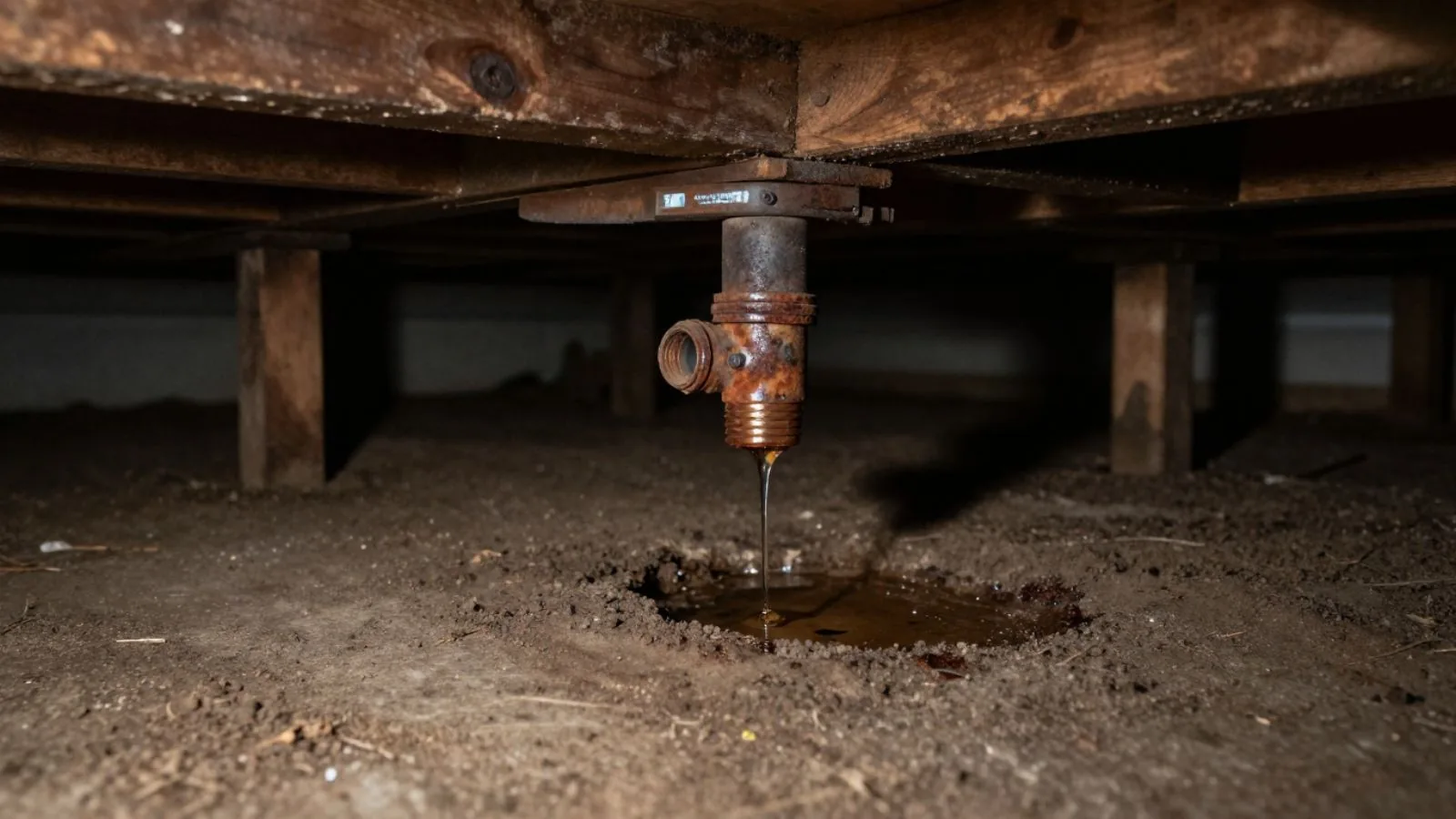
Crawl space water damage is water collecting in the void under a raised floor. The space is dark, closed and poorly ventilated, so a leak or a storm can leave insulation, joists and the underside of the floor wet for a long time before anyone looks.
Homes on raised foundations have crawl spaces, and homes on concrete slabs do not, so this page applies if your house has an access hatch under it.
Do not enter a crawl space with standing water near wiring. Call first.
Symptom first: how you notice a wet crawl space
Soft or bouncy floor
Damp subfloor loses stiffness.
Musty smell in the house
Odors from below drift up through the floor.
Cold, damp floors
Wet insulation and subfloor chill the room above.
Water seen at the hatch
Standing water or mud visible when the access panel is opened.
When a wet crawl space is an emergency
Water around wiring or ducts is urgent, as is a floor that feels spongy. Turn off the main water if a pipe is leaking, and stay out of the space if water touches electrical lines.
Crawl spaces are confined, so crews use protective gear and lighting, and entry is not a casual homeowner task when water is present.
Floor feels spongy?
Call and a crew can be sent today when available.
What puts water under a house
Plumbing leaks above, drain line failures, storm runoff and groundwater all feed a crawl space. Poor grading and clogged gutters send surface water toward the foundation.
The City of Madera draft housing element reports that about 18 percent of units predate 1960. Older homes more often sit on raised foundations, though your own foundation type is easy to confirm by looking for a vent or access panel.
How cleanup is done
Crews extract standing water, remove wet insulation and any vapor barrier that holds water, and dry joists and subfloor with air movers and dehumidifiers. Moisture meters track readings in the framing.
Access
Open and assess the space safely.
Extract
Remove standing water.
Remove
Take out wet insulation and damaged barrier.
Dry
Run equipment until framing is dry.
The structural drying page describes the equipment, and a leaking supply line may trace to a burst pipe.
Fix the cause
Drying alone does not stop the source. Downspouts should discharge away from the house, grading should slope away, and any leaking pipe should be repaired. A contractor for drainage or vapor control may be needed, which is a different trade from restoration.
What the crew looks for under the floor
Crews check for standing water, wet or fallen insulation, stained joists, damp soil and any plumbing leaks. Moisture readings are taken in the joists and subfloor from below, and a flashlight inspection looks for rust on ducts and fasteners.
Vapor barriers are examined, since a torn or pooled barrier can trap water instead of keeping it out. Wet insulation is removed, because it holds moisture against the wood for months.
Access matters. A small hatch means smaller equipment and slower work, and the crew explains the plan before starting.
Prevention around the foundation
Downspouts that drop water beside the house send it toward the crawl space. Extend them several feet away. Soil near the foundation should slope away from the wall, and gutters should be cleared before storm season.
Check plumbing under the house a couple of times a year, looking for drips, stains and wet insulation. Seal gaps where pipes and wires enter the foundation.
If moisture problems keep coming back, a contractor who does drainage and moisture control is the right next call. Restoration cleans up the loss, and that contractor works on keeping it from recurring.
Safety checklist before the crew arrives
- Do not enter a crawl space with standing water or exposed wiring
- Shut the main valve if a line is leaking
- Do not run a gas generator near the access hatch
- Photograph from the hatch with a flashlight
- Leave insulation and debris for the crew to document
Wet insulation and framing are handled and dried to the standard in ANSI/IICRC S500.
What sets the price
| What changes the price | Why it matters |
|---|---|
| Access | Tight spaces slow work. |
| Insulation | Wet insulation must be removed and replaced. |
| Water depth | More water means more extraction. |
| Drying days | Soil and wood dry slowly. |
| Cause repair | Drainage and plumbing are separate. |
Coverage depends on whether the water came from a sudden plumbing failure, and flood is usually excluded, so check your policy and ask your insurer. Call (559) 597-1434 and ask for the scope and price of your crawl space job before the crew goes under the floor.
Where we work
The line covers Madera and Chowchilla, and the flood page covers rising water in the living space.
Questions About Crawl Space Water Damage in Madera
Do you handle crawl space emergencies at night or on weekends in Madera?
Yes. A crawl space emergency is answered like any other at night or on a weekend, and a crew is sent the same day when one is available.
Do I need to go into the crawl space?
No. Leave entry to the crew, especially if water is near wiring.
Do you do drainage or waterproofing?
No. Restoration dries and repairs. Drainage work is a separate trade.
Is crawl space water covered?
Sudden plumbing leaks may be, while flood and gradual moisture often are not. Check your policy or ask your insurer.