
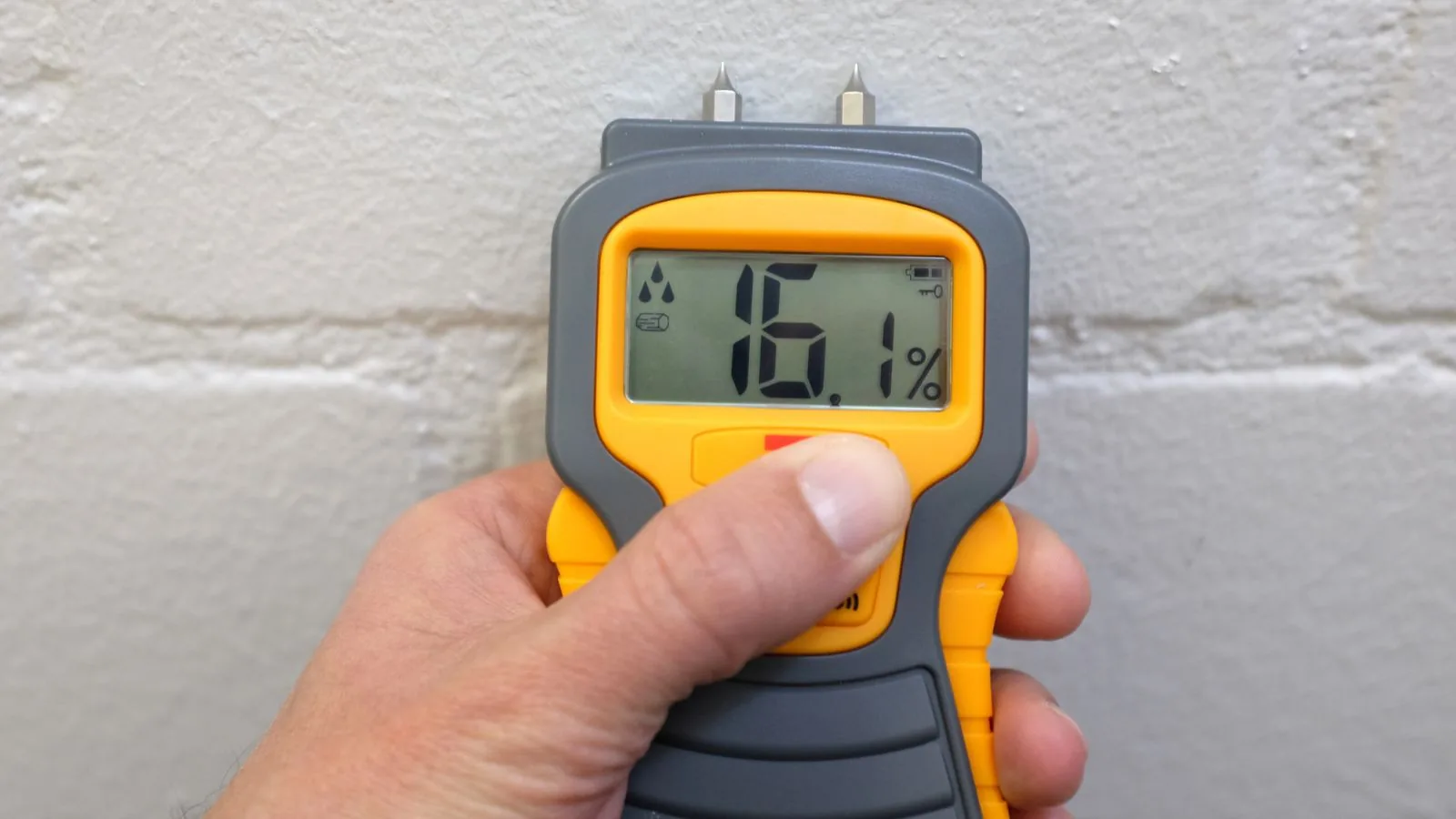
Structural drying is the controlled removal of moisture from framing, subfloor, drywall and other building materials after water damage. It is also called water mitigation, and it is the step that decides whether a wet building recovers or develops lasting problems.
Drying is measured, not guessed. Technicians take readings before, during and after, and equipment stays until the materials reach the dry standard for that material.
Call the 24/7 line if materials are still wet after extraction.
Symptom first: it looks dry, but is it?
A floor can feel dry on top while the subfloor stays wet. Walls can look normal while insulation inside holds water. Clues include a musty smell, baseboards that stay cool, paint that bubbles, and flooring that cups or lifts days after the leak.
These are signs that moisture is still in the structure. The trade name for the fix is structural drying, and the rest of this page explains how it is done.
How moisture mapping works
Technicians use pin and pinless moisture meters and thermal imaging to find wet materials. Readings are recorded on a map of each room, so progress is visible day by day.
Wet materials are marked, and baseline readings from unaffected areas serve as a comparison. The drying goal is the reading for that material in normal conditions.
Materials still wet?
Call and schedule moisture mapping. A crew can be sent when available.
Equipment in plain words
Air movers
High-speed fans that push air across wet surfaces to speed evaporation.
LGR dehumidifiers
Low grain refrigerant units that pull water vapor out of the air.
Moisture meters
Tools that read water content in wood, drywall and flooring.
Injection and cavity drying
Systems that move dry air into wall cavities and under flooring.
Equipment is not rented out by this site. Callers sometimes ask about renting air movers, but drying works best when meters guide how it is set up and when it stops.
How long drying takes
Many jobs need a few days, and large or long-wet losses take longer. Thick materials such as hardwood, subfloor and concrete dry more slowly than drywall.
Drying follows the ANSI/IICRC S500 standard for water damage restoration, and you can ask any company whether its crews work to it. The hardwood floor page shows how thick materials affect timing.
Water mitigation versus rebuild
Mitigation is drying and protecting the property from further damage. Rebuild is replacing materials that cannot be saved. They are separate scopes, and permit rules for rebuild work vary, so ask the City of Madera Building Division, or the county outside city limits.
The wall and drywall page describes common rebuild work.
What the dry standard means
A dry standard is a reading that matches the same material in an unaffected part of the home. Technicians take baseline readings in dry rooms, then work until the wet materials reach the same range. A floor that reads higher than its baseline is not finished, even if it feels fine.
Different materials have different targets. Drywall, softwood framing, hardwood and concrete all read on different scales, and a good crew knows which scale applies to which surface. The readings are recorded each day.
This is why a drying log matters. It shows when equipment was placed, how readings changed and when each area reached its target.
Common drying problems
Closed doors trap humid air and slow drying. Cool rooms hold more moisture than warm ones, so temperature control helps. Wet materials covered by paint, vinyl or sealed finishes release moisture slowly, and the crew may remove the covering to let the material breathe.
Moving equipment too soon is another problem. If a unit is pulled while a wall cavity is still above its target, moisture rebounds and the stain returns. Insist on a final reading before any rebuild starts.
Running equipment longer than needed costs money, and stopping too soon costs more. Daily readings are the fair way to decide.
Safety checklist before the crew arrives
- Keep equipment cords out of wet areas and away from foot traffic
- Do not move or switch off equipment without asking the crew
- Keep children and pets away from fans and dehumidifiers
- Report new stains, smells or warm spots right away
- Keep a copy of each day's readings
What sets the price
| What changes the price | Why it matters |
|---|---|
| Square footage wet | More area means more equipment. |
| Materials | Hardwood and concrete dry slowly. |
| Water category | Contaminated water adds cleaning. |
| Drying days | Equipment time follows readings. |
| Access | Wall cavities and tight spaces add setup. |
Drying costs are often part of a covered sudden loss, but wording differs, so check your policy and ask your insurer. Call (559) 597-1434 to get the scope and price for your drying job, including the days of equipment.
Where we work
The line covers Madera and Chowchilla, and starts with water extraction when water is standing.
Questions About Structural Drying in Madera
How do I know the structure is dry?
Moisture readings compared with dry baselines for each material, recorded until they meet the dry standard.
Can I rent air movers instead?
This site does not offer rentals. Drying works best when meter readings guide setup and finish.
How long will equipment run?
Often a few days, longer for thick or long-wet materials. Daily readings decide.
Is drying covered by insurance?
Often as part of a sudden loss, but wording differs. Check your policy or ask your insurer.