
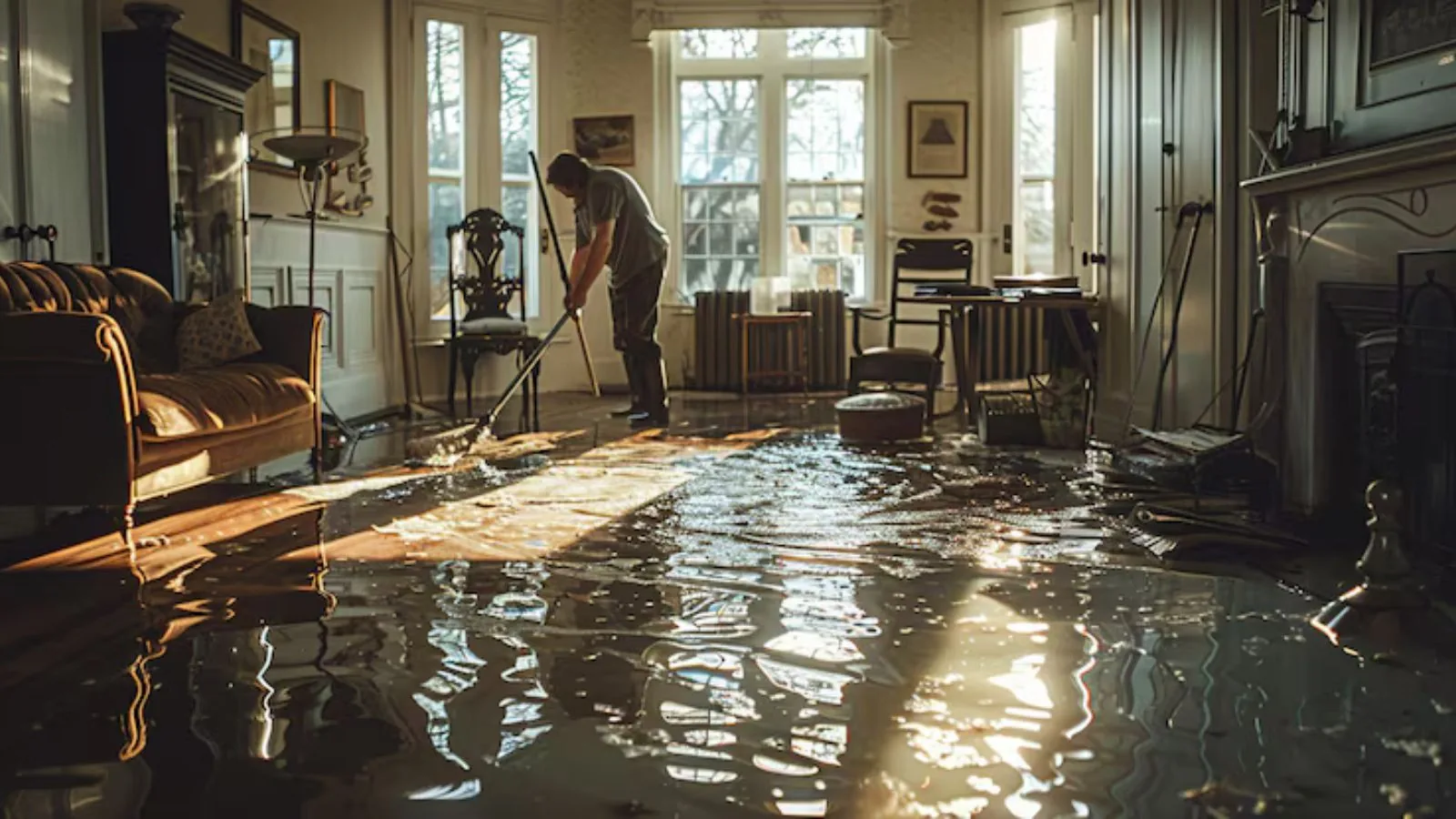
Water extraction is the physical removal of standing water from a building using submersible pumps, truck-mounted or portable extraction units and wet vacuums. It is the first mechanical step after the source is stopped, and it decides how much drying is needed afterward.
Every hour water stays in carpet, pad and wood, more of it wicks into materials. Removing the bulk quickly shortens the drying that follows.
If water is standing now, stop the source if you can, and call.
When standing water is an emergency
Standing water is an emergency when it covers a floor, reaches outlets or keeps rising. Shut off the main valve if a pipe is the cause, and stay out of water near electrical panels or plugged-in devices.
Lift valuables, pull rugs and furniture legs off wet carpet, and place foil or plastic under furniture feet to limit staining. Do not run a household vacuum on water.
A crew can be sent the same day when one is available, and the dispatch line is answered at night and on weekends.
How extraction differs from drying
Extraction removes liquid water. Drying removes the moisture that remains in materials, which takes air movers and dehumidifiers. Both are needed, and the structural drying page covers the second part.
Pumps handle deep water. Extraction wands pull water out of carpet and pad, and wet vacuums handle hard floors and corners.
Water standing now?
Stop the source and call. A crew can be sent today when available.
Where the water comes from
Sources include supply lines, water heaters, appliances, roofs and drains. A burst pipe or a water heater leak are common causes, and each has its own shut-off steps.
The City of Madera Water Division operates the public system and takes reports of leaks on its side of the meter. Water inside your property is yours to stop, so know where the main valve is.
Call Underground Service Alert before digging anywhere on the property to look for a line.
What happens on site
Safety check
Confirm the source is off and power is safe.
Pump and extract
Remove standing water from floors and carpet.
Map moisture
Meters and thermal imaging find wet areas.
Set up drying
Place air movers and dehumidifiers.
Water category matters. Clean water is handled differently from water that may be contaminated, and the flood damage page explains categories.
What can be saved
Hard floors and framing often dry in place. Carpet may be saved if the water was clean and extraction was quick, and pad is often replaced. Furniture with solid wood frames usually survives, and particleboard does not.
The carpet water damage page explains the carpet decision in detail.
Equipment used to extract water
Submersible pumps handle standing water several inches deep. Portable extraction units and truck-mounted units use strong vacuum to pull water out of carpet and pad. Weighted extraction tools press water out of carpet from above, and squeegees and wet vacuums handle hard floors and corners.
Crews choose the tool for the surface. A thick pad under carpet may need to be lifted to extract water trapped below it, and floors under cabinets may need small tools that reach under toe kicks.
Extraction is measured by what moisture meters read afterward, not by how much water came out.
Mistakes to avoid and quick steps
Do not use a household vacuum on water, and do not walk through standing water near outlets. Do not turn on ceiling fans or lights in a room where water dripped through the ceiling. Do not leave wet rugs on wet floors, since they stain the surface below.
Quick steps that help include removing small furniture, propping up sofa legs with foil or plastic and opening interior doors. Photograph the room before and after you move things.
If water came from outside, or from a drain, the water may be contaminated. Call before touching it, and tell the dispatcher what you know about the source.
How the work is measured
Extraction is not finished when the water stops coming out. ANSI/IICRC S500, the published standard for water damage restoration, calls for moisture readings and a drying plan, so ask the crew to show how it will confirm the floor and the walls are dry.
What sets the price
| What changes the price | Why it matters |
|---|---|
| Water volume | More water takes more pumping and time. |
| Category | Contaminated water adds protective steps. |
| Floor types | Carpet, wood and tile extract differently. |
| Drying needed after | Remaining moisture decides equipment days. |
| Hours and access | Tight access slows extraction. |
Insurers often cover sudden water loss and exclude flood, so check your policy and ask your insurer. Call (559) 597-1434 and ask what your extraction involves and what it costs, explained up front.
Where we work
The line covers Madera and Chowchilla.
Questions About Water Extraction in Madera
Do you handle water extraction emergencies at night or on weekends in Madera?
Yes. Standing water gets deeper into floors by the hour, so the line is answered around the clock and a crew is sent the same day when available.
How soon should water be removed?
As quickly as possible. Water that stays wicks into materials and lengthens drying.
Is extraction enough?
No. Moisture left in materials needs air movers and dehumidifiers afterward.
Can I use a shop vacuum?
A wet-dry vacuum can help with small spills, but never use a household vacuum, and stay away from electrical hazards.