
People ask how many days the equipment will run, and a fair answer starts with what got wet. A tile floor and a plywood subfloor under hardwood are not the same job. Drywall dries faster than a thick wood beam, and a closed wall cavity dries slower than an open floor.
This guide explains what sets drying time and how you can tell when it is truly done.
What sets the drying time
| Factor | How it changes drying time |
|---|---|
| Material | Porous materials such as drywall and carpet pad absorb a lot and release it slowly, while dense wood and concrete hold moisture deeper |
| Amount of water | More water means more to remove and a longer period of drying |
| Time before action | Water that sat longer soaks deeper and spreads farther |
| Air and temperature | Moving, warm, dry air carries moisture away faster |
| Access | Closed wall cavities and floors under cabinets dry slowly unless opened |
| Water category | Contaminated water changes what is removed rather than dried |
How crews dry a structure
Extraction pulls out standing water first. Then air movers push dry air across wet surfaces, and dehumidifiers pull moisture out of the air so it can absorb more from the materials. Crews place equipment based on the room size and the materials.
Wall cavities may be opened or vented so air reaches the wet insulation and framing. The structural drying page explains the equipment and the readings in detail.
The approach follows ANSI/IICRC S500, the standard for professional water damage restoration.
Ask for the Readings
Call and ask how drying is verified.
Why the surface can feel dry while the wall is not
Materials dry from the surface first, and a dry surface can sit on top of a wet core. Paint, vinyl and sealed finishes slow the release of moisture. A hand on the wall cannot tell you what is inside.
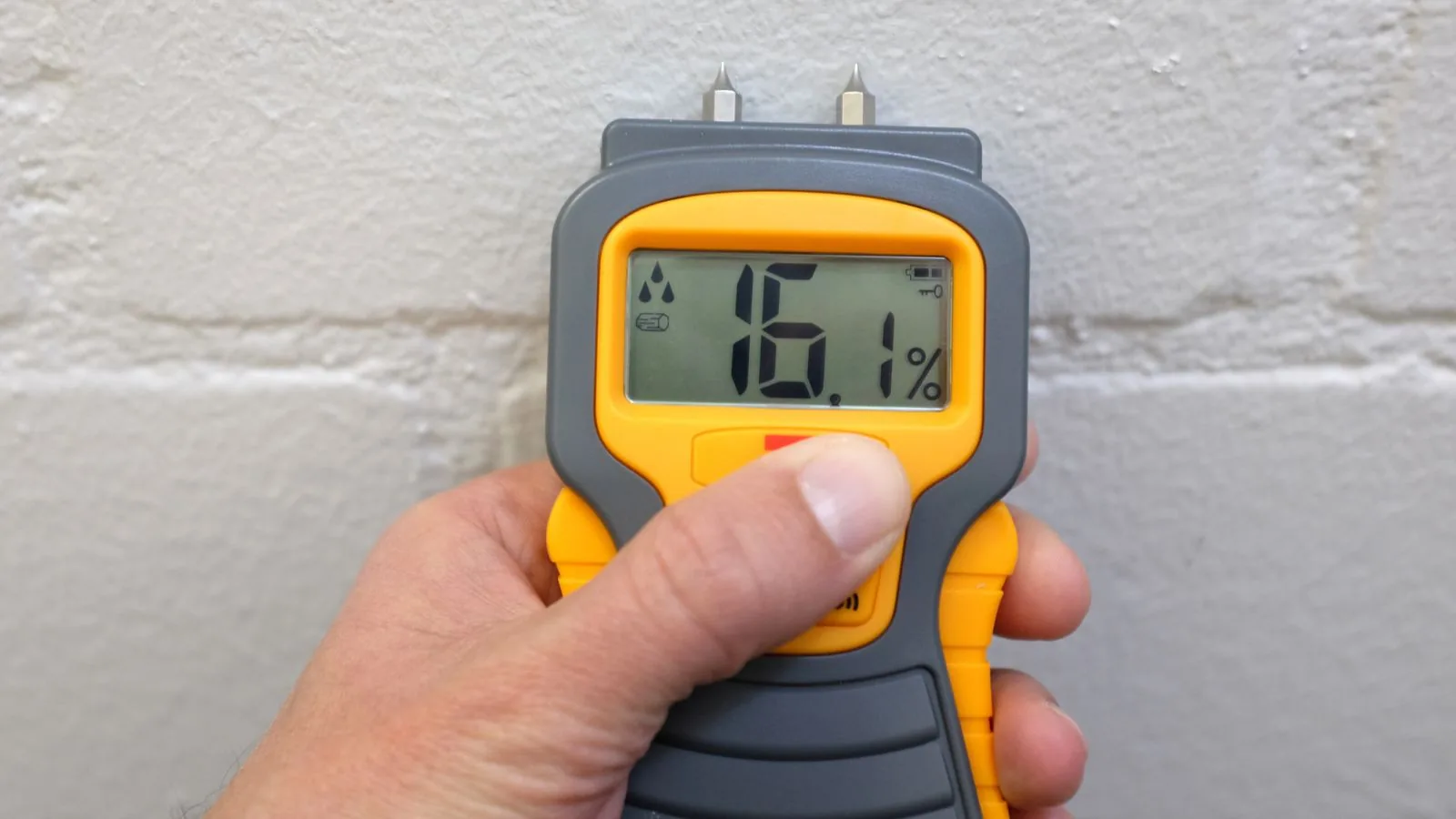
Moisture meters read the material itself. Technicians compare readings in wet areas to readings in a dry part of the home. When the wet area matches the dry reference, drying is complete for that material.
Stopping early invites trouble. A wall closed up while still damp can stain, smell and peel within weeks.
What you can do to help
- Keep doors and windows as the crew directs, since equipment works best in a controlled space
- Do not turn off or move equipment without asking
- Keep pets and children away from fans and cords
- Leave closets and cabinets open if the crew asks
- Report any new stain or smell right away
- Keep a copy of daily readings and notes
Running equipment draws power, so expect more electricity use during drying. Ask the crew whether the power draw is normal for the setup.
Signs the plan is working
A drying job should show progress on paper and in the room. Readings fall day over day, the air feels drier and the stain stops spreading. If readings stall, the crew changes the plan by moving equipment, opening another section of wall or adding a unit.
A job that is not improving after a day or two deserves a direct question. Ask what the readings are, what the target is and what will change. A crew that tracks the numbers can answer quickly, and a crew that cannot is a warning.
Weather outside matters too. When the air outside is dry and mild, opening windows can help for small losses. Do that only when the crew says it fits the plan.
Local details that affect drying
Per the City of Madera draft housing element, about 18 percent of homes predate 1960. Many older homes have original wood floors and thick plaster or lath walls, which can hold moisture longer than a modern sheet of drywall. A crew may plan a longer drying period for them.
About 33 percent of units were built between 2000 and 2009, and newer homes are often built tighter, with closed wall cavities that need venting to dry. Both situations get a drying plan based on readings.
For homes near Chowchilla and the county's irrigation channels, water that came from outside brings soil and debris, which changes what is removed. The flood damage page explains the difference.
A rough timeline of a typical job
Day one
The crew assesses, extracts and places equipment.
Next few days
Readings are taken daily and equipment is adjusted.
Final check
Readings in wet areas match the dry reference.
Equipment removed
The rebuild can begin once the structure is dry.
Real jobs vary, and the time ranges from a short drying period to a longer one for heavy losses. Ask the crew for its plan and the date of the next reading.
Drying Time Questions in Madera
Can I speed up drying?
Proper equipment placement and keeping the space closed as directed help the most. Household fans and open windows help with small losses.
Why is my equipment still running after a week?
Dense materials such as framing, subfloor and hardwood dry slowly. Ask for the readings and the target.
Is it normal for the humidity to be high during drying?
Humidity drops as dehumidifiers pull moisture from the air. Readings tell the crew whether the plan is working.
Do older Madera homes take longer to dry?
Sometimes. Homes with original wood floors and thicker wall materials can hold water longer than modern drywall, so the crew relies on readings.