
When water is spreading, people call the first number they find. That is understandable, and a good company can still be reached that way. The calls that go badly are the ones where the scope is vague, the price changes at the door or the equipment disappears before the walls are dry.
This guide gives you questions to ask on the phone and signs to watch for in person.
Start with how they answer the phone
A 24/7 line should be answered by a person or a clear call handling system, with a way to describe the situation. Be wary of a company that cannot tell you what happens next. A good dispatcher asks about the source of the water, how long it has been running and how many rooms are affected.
Ask whether a crew can be sent the same day. A careful company says when it can and, if it cannot, says so honestly. Be cautious of anyone who promises a specific arrival time before knowing the address and the situation.
Questions that tell you the most
| Ask this | A good answer sounds like | A warning sign |
|---|---|---|
| Do you work to ANSI/IICRC S500? | Yes, and we record moisture readings daily | A vague answer or no mention of readings |
| What will you do on the first visit? | Stop the spread, map the moisture, extract and set equipment | Only a price and a signature |
| Will I get a written scope? | Yes, before the work starts | Verbal only |
| How do you decide what to remove? | By meter readings and the water category | Remove everything to be safe |
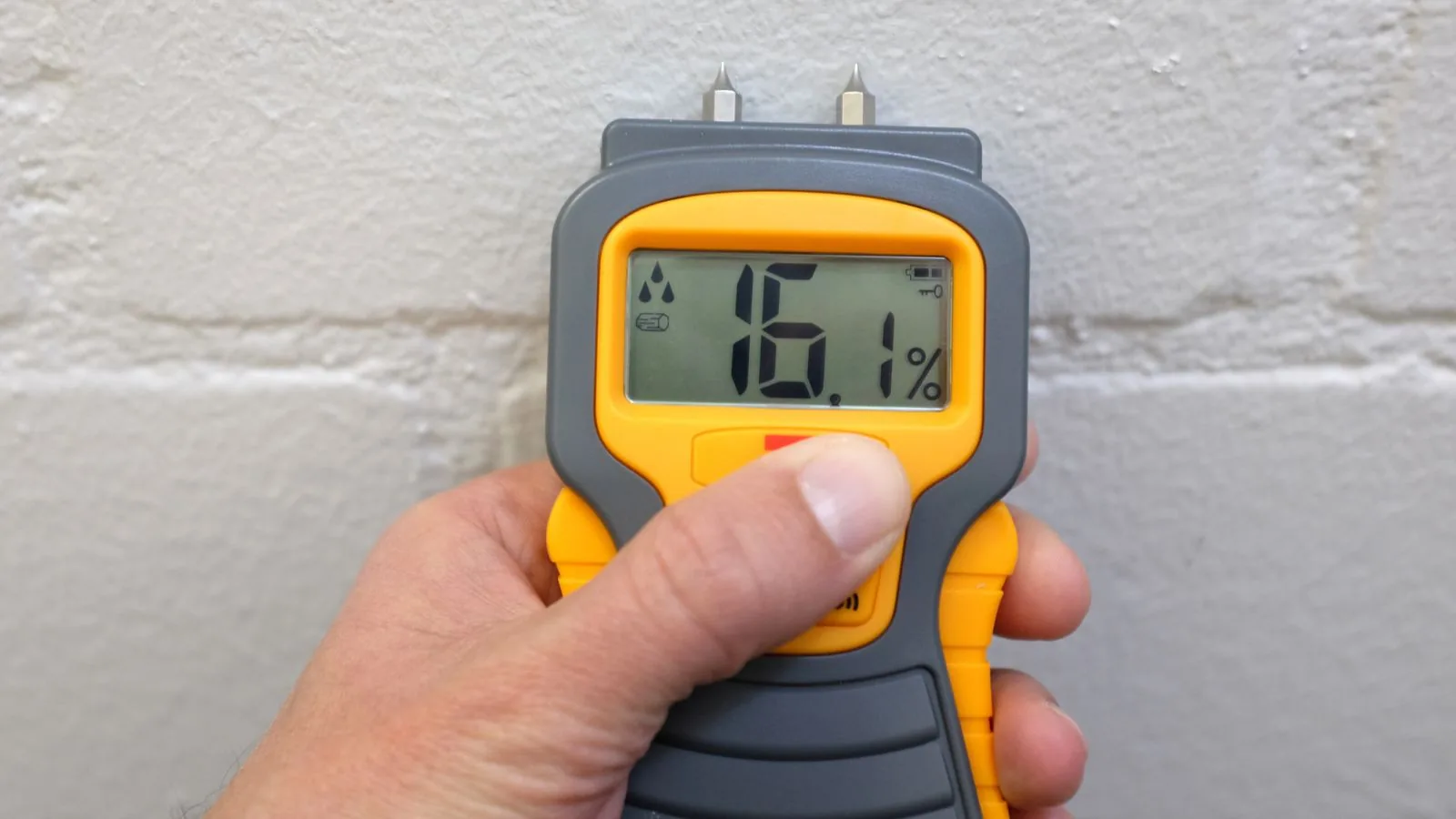
| When will you pull the equipment? | When readings reach the dry standard | After a fixed number of days |
| Do you handle the rebuild too? | Mitigation first, and rebuild is a separate scope | Pressure to sign both at once |
Ready to Ask the Questions?
Call the 24/7 line and ask any of them.
Read the paperwork before you sign
Before signing, read what the authorization actually covers. A work authorization should describe the scope, the rate basis and what happens if conditions change. If it also assigns your insurance benefits or hands over control of the claim, ask what that means and take time to read it.
It is reasonable to ask for a copy of everything you sign. It is also reasonable to ask the company to explain a line item in plain words. A careful company would rather answer questions on day one than argue about an invoice on day ten.
Check the contractor license
California licenses contractors through the Contractors State License Board, and you can look up a license on the board's website. Ask the company which license applies to the work and confirm it yourself. A company that hesitates to answer is telling you something.
Ask also about insurance for the crew and the work. You are entitled to ask for proof, and a professional company expects the question.
Compare scopes, not just prices
Two quotes for the same job can differ because they describe different work. One may include daily monitoring, containment and contents handling while the other is a flat price for a few fans. Put the scopes side by side and ask each company to explain the gaps.
Beware of pricing that looks too good. Equipment is rented by the day, labor is billed by the hour and disposal has a cost. A very low bid often grows during the job. A good company explains what sets its price, as on the water extraction page, and tells you when the number could change.
What a good job looks like in the first 24 hours
Assess
The crew finds the source, checks the category of water and maps moisture with meters.
Extract
Standing water is removed and wet pad or insulation is pulled where needed.
Set equipment
Air movers and dehumidifiers are placed to match the room and the materials.
Explain
You get a plain description of the plan, the timing and the next check.
Daily moisture readings should follow. The structural drying page explains why they matter.
Local factors in Madera and Chowchilla
A company that serves the area should know the housing mix. The City of Madera draft housing element reports that about 47 percent of units were built before 1980 and about 33 percent between 2000 and 2009, so a crew will see both older plumbing and newer construction with original fittings.
Ask whether the company serves your side of the county. Crews that cover Madera and Chowchilla along State Route 99 can often reach both, but travel time depends on where the crew is. The City of Chowchilla was incorporated in 1923, and its water comes from the City's groundwater source, which is operated separately from the City of Madera's system.
Ask about permits, too. The City of Madera Building Division handles permits inside the city, and Madera County handles properties outside it.
Choosing a Restoration Company in Madera
Should I pick the cheapest restoration company?
Compare scopes first. A low bid that leaves out monitoring, containment or documentation can cost more later.
Do I need to get three quotes during an emergency?
Water does not wait. Get the best information you can quickly, start mitigation with a company that explains its plan and compare the rebuild scope later.
Can my insurer require a specific company?
Policies differ. Ask your insurer in writing what is required, and keep the reply.
Are Madera restoration companies required to pull a permit?
Mitigation often does not need one, while rebuild work sometimes does. Ask the City of Madera Building Division, or the county outside city limits, about your project.