
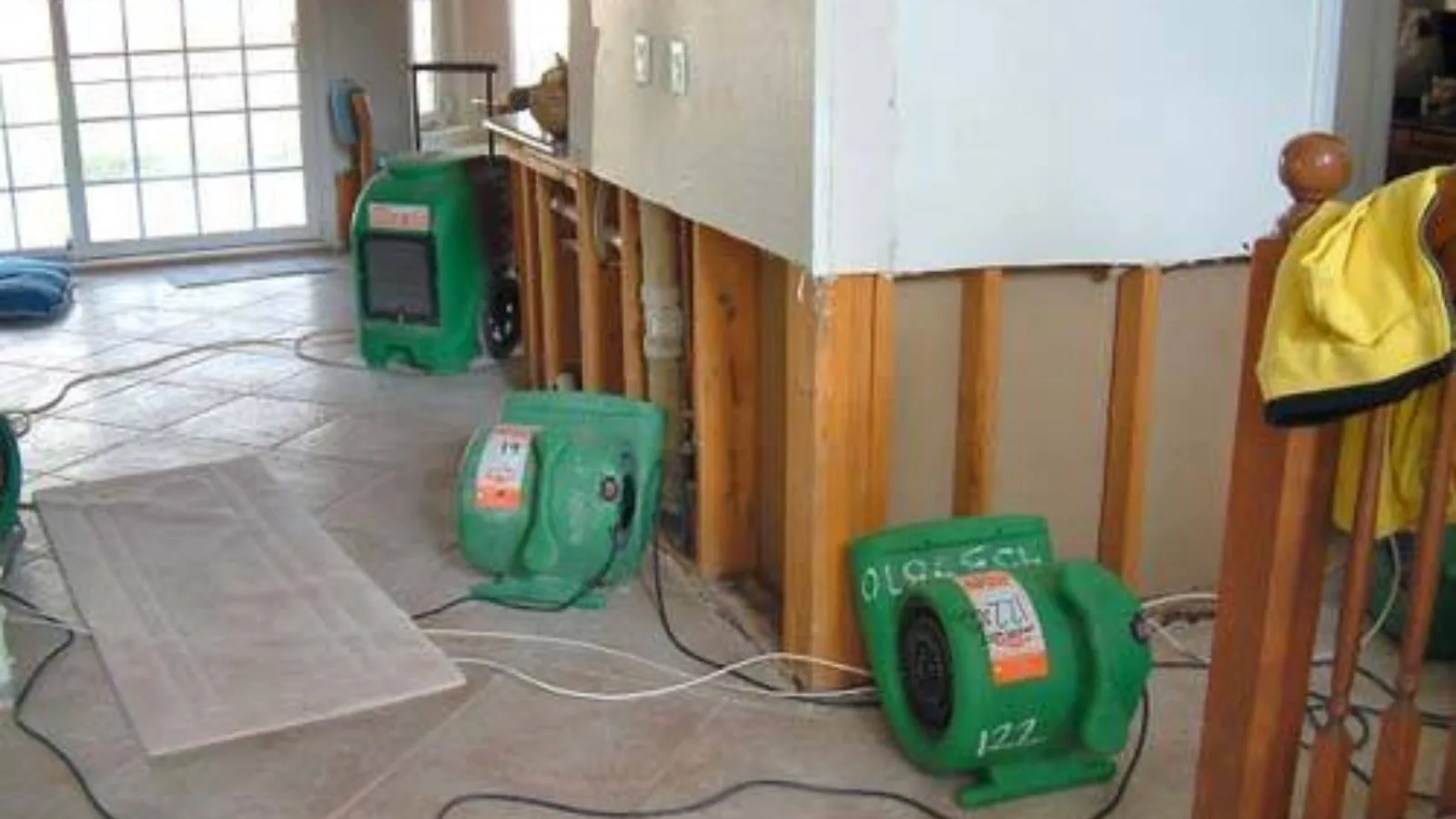
The smell is often the first sign that a leak was bigger than it looked. You mopped, the surface feels dry and yet the room smells closed up and stale. That is typically moisture trapped in a place the towel never reached.
This guide covers where odors hide and how to trace them. It is about the building and the drying process, and it makes no claims about health effects. If you have health questions, talk to a physician.
Why a leak leaves an odor behind
Damp materials such as paper-faced drywall, wood framing, carpet pad and insulation hold moisture for a long time when air cannot move across them. As they stay damp, they give off the stale smell people call musty. The odor is a signal, not the problem itself.
That is why air fresheners and scented cleaners do not work for long. They cover the smell without removing the moisture. When the damp material is dried or removed, the odor usually fades on its own.
Where the smell hides
| Where the smell is strongest | Common source | What to do next |
|---|---|---|
| Near a baseboard or low wall | Wet drywall or insulation inside the cavity | Check with a moisture meter and open the wall if readings are high |
| Over carpet | Damp pad or subfloor | Lift a corner and inspect the pad and tack strip |
| In a closet or cabinet | Water that wicked into the base or back wall | Empty it, check the wall behind and run a fan |
| Near a vent or air handler | Condensate pan or drain line | Inspect the pan and flush the drain line |
| Under the house or in a crawl space | Wet insulation, damp soil or a leaking line | See the crawl space page and check plumbing |
| In a bathroom or laundry | A slow leak at a supply line or drain | Look under sinks and behind the washer |
If the odor moves around the house, it may be traveling through the air handler. A technician can tell whether the system is spreading the smell or producing it.
Still Smelling It?
Describe where it is strongest when you call.
How to trace it
Follow the nose
Walk through the house with windows closed and note where the smell is strongest.
Look for stains
Check ceilings, wall bases, under sinks and behind appliances.
Feel for cool or damp
Damp materials often feel cooler than the area around them.
Meter it
A moisture meter confirms what the eye cannot see. A crew brings one.
Open and dry
If readings are high, the material is opened or removed so air can reach the cavity.
What actually fixes it
Fixing the cause means finding the water source, removing materials that cannot dry and drying the rest to a normal range. Pad, insulation and soft drywall are usually removed. Framing and hard surfaces are dried in place.
The structural drying and dehumidification page explains how equipment brings materials back to normal readings. The wall and drywall page and the carpet page cover the two materials that most often hold the smell.
After drying, wash hard surfaces and let the space air out. If the smell returns after rain or when the air conditioner runs, there is likely another source of moisture.
A note on standards
Professional drying follows ANSI/IICRC S500, which is why a crew measures moisture in the materials and does not rely on the nose. Ask whether the crew works to that standard, and ask to see the readings.
Madera homes and where odors tend to start
The City of Madera draft housing element reports that about 47 percent of units were built before 1980, and about 18 percent predate 1960. Older homes often have crawl spaces, original plumbing and older wall insulation, all of which can hold moisture when something leaks.
About 33 percent of units were built from 2000 to 2009. Newer homes tend to be built tighter, and a leak in a closed wall cavity can take time to show. A stale smell that appears weeks after a repair is worth checking.
Houses near Chowchilla and the county's slough channels sit in the same Valley setting, and any crawl space or low area that took in outside water deserves a close look. The crawl space page explains what a crew checks.
When to call for help
- The smell returns after you clean and air out the room
- You find a stain, a soft spot or a bubbled seam
- More than one room smells the same
- The odor appeared after a leak, a storm or a plumbing repair
- Moisture readings are higher than in a dry room
Call (559) 597-1434 and describe what you notice. The 24/7 line can talk through whether a visit makes sense.
Musty Smell Questions in Madera
Will air fresheners or ozone get rid of the smell?
They can cover it for a while, but if the material stays damp, the smell comes back. Find and dry the source.
How long should a musty smell last after drying?
If everything dried to normal readings, the odor usually fades within days. If it lingers, a hidden wet spot is likely.
Can a musty smell come from the air conditioner?
Yes. A clogged condensate line or a wet pan can hold water and produce an odor. An HVAC technician can inspect and flush the line.
Is a crawl space smell common in older Madera homes?
Older homes with crawl spaces can hold moisture there, especially if insulation is wet or a line is leaking. A crew can inspect from the access hatch.